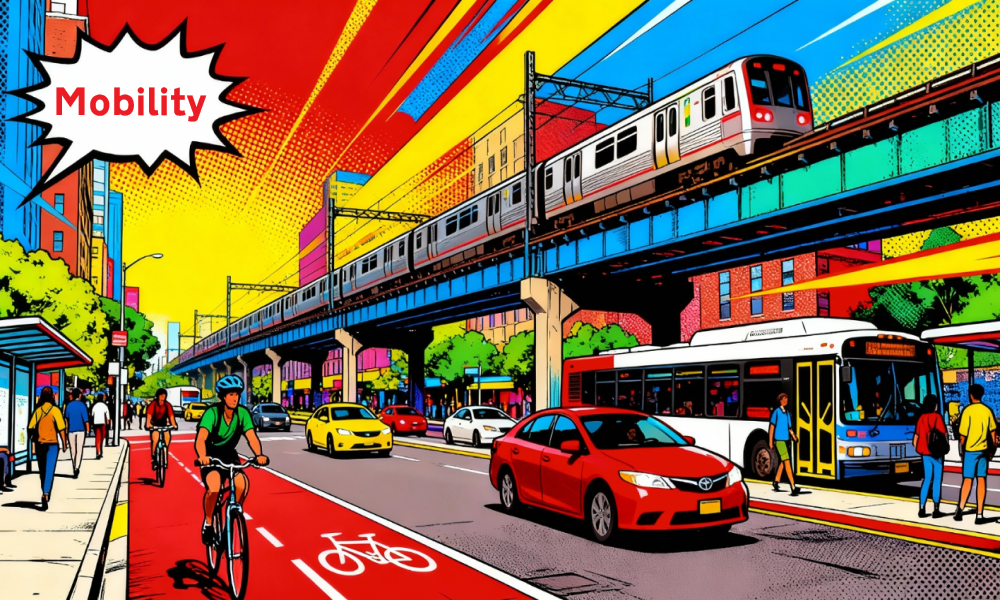
As cities and regions evolve, mobility systems are being reshaped by rapid technological change, shifting user expectations and the urgent need for more sustainable, inclusive transport. The challenge is no longer simply moving people and goods efficiently. It is about orchestrating a seamless, multimodal ecosystem, one that unites public transport, shared mobility, automated vehicles, active travel and intelligent traffic management into a coherent, user centred whole.
At the heart of this transformation lies a powerful question: How can data driven systems deliver reliable, equitable and integrated travel across all modes? The answer requires a blend of technology, policy and design thinking that moves beyond traditional silos and embraces a truly systemic approach.
This article explores how AI, Digital Twins, real time platforms and emerging technologies are redefining multimodal mobility system management and what it will take to build networks that are predictive, resilient and accessible for all.
For decades, transport modes have been planned and operated largely in isolation. Public transport authorities, road operators, shared mobility providers and emerging automated vehicle services often work with different datasets, priorities and operational frameworks. The result is a fragmented user experience, with disconnected journeys, inconsistent information and inefficiencies that undermine trust and accessibility. Multimodal mobility system management aims to change this by creating a coordinated, data driven operating environment. This involves:
The goal is not simply to optimise individual modes, but to orchestrate the entire network as a unified system.
Demand management is emerging as a cornerstone of modern mobility. Instead of reacting to congestion or overcrowding, operators can now anticipate and influence travel patterns using predictive analytics and behavioural insights. Data driven demand management enables:
This shift from reactive to proactive management improves reliability, reduces emissions and enhances the user experience, particularly for those who rely most on public and shared transport.
A truly multimodal system must serve all users, not just the digitally connected or physically able. Equity is not a by product of good design, it is a deliberate outcome of inclusive planning, policy and technology deployment. Key considerations include:
Equity must be embedded into algorithms, service design and governance frameworks. Without this, digital innovation risks widening mobility gaps rather than closing them.
As multimodal systems become more interconnected, they also become more vulnerable. Cybersecurity and operational resilience are now fundamental to mobility system management. A resilient multimodal network requires:
Resilience is not only about protecting infrastructure, it is about maintaining user trust. A single cyber incident or system failure can undermine confidence in MaaS, automation and digital mobility services.
Mobility as a Service (MaaS) has long been heralded as the future of integrated travel. Yet despite promising pilots, widespread adoption remains uneven. The challenge is not technological, it is structural. Scaling MaaS requires:
MaaS must evolve from a collection of apps to a core component of transport policy, enabling seamless multimodal journeys that are reliable, affordable and accessible.
Automated vehicles (AVs) are often discussed in isolation, but their real impact will be felt within the broader multimodal ecosystem. AVs can enhance multimodality if integrated thoughtfully. Potential contributions include:
However, unmanaged AV deployment could increase congestion, reduce active travel or compete with public transport. The key is strategic integration, guided by data, policy and user needs.
Digital orchestration platforms are emerging as the "operating systems" of modern mobility. These platforms integrate data from all modes and provide operators with a unified view of the network. Capabilities include:
This level of orchestration transforms mobility from a set of independent services into a cohesive, adaptive ecosystem.
Digital Twins are becoming indispensable tools for planning and managing multimodal networks. By creating a virtual replica of the transport system, operators can simulate scenarios, test interventions and optimise performance before implementing changes in the real world. Applications include:
Digital Twins enable evidence based decision making at a scale and speed previously impossible.
Beyond AI and Digital Twins, several emerging technologies are poised to reshape multimodal mobility management:
These technologies will not replace existing systems, they will enhance them, enabling more responsive, efficient and user centric mobility networks.
Multimodal mobility system management represents a fundamental shift in how we design, operate and experience transport. By harnessing data, embracing emerging technologies and prioritising equity, we can build mobility systems that are not only efficient, but also resilient, inclusive and deeply connected.
The future of mobility is not defined by any single mode or technology. It is defined by orchestration, the ability to bring all modes together into a seamless, intelligent, user centred ecosystem that works for everyone.
More to read here> Articles