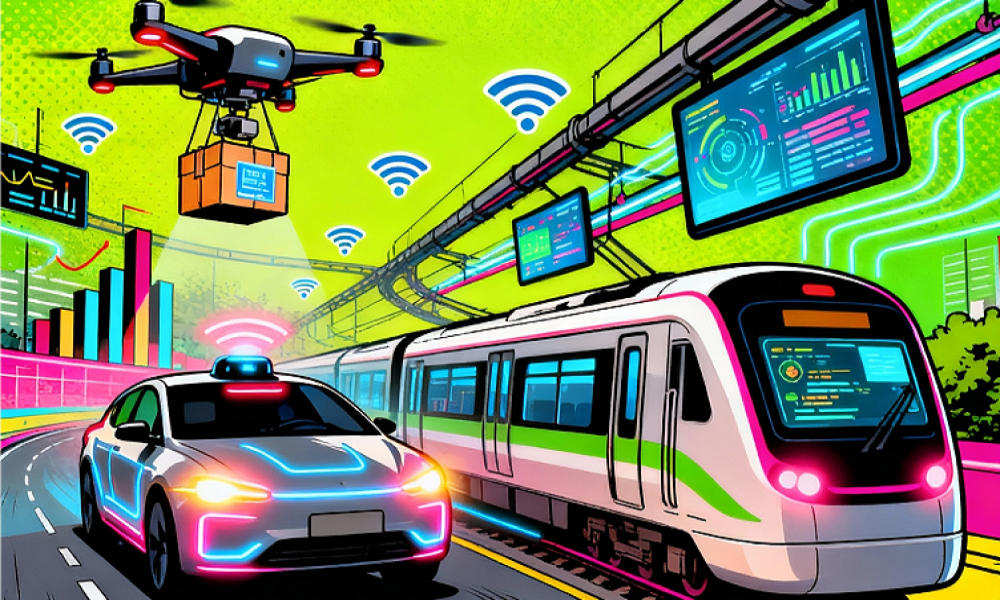
Transport networks around the world are undergoing a profound transformation. As digital technologies become deeply embedded in mobility systems, the sector faces a pivotal question: How can intelligent innovation deliver safer, more resilient and more inclusive mobility for all? The answer lies not in any single technology, but in the thoughtful integration of AI, C ITS, V2X, automation and cybersecurity into a coherent, human centred ecosystem.
This article explores how intelligent systems can strengthen safety and resilience across increasingly complex transport networks and what it will take to ensure these systems earn and maintain public trust.
Traditional safety models rely heavily on reactive interventions, responding to incidents after they occur. Intelligent systems offer a fundamental shift. With AI driven predictive analytics, transport authorities can identify risks before they escalate, enabling proactive interventions that save lives and reduce disruption.
Machine learning models can analyse vast datasets from sensors, connected vehicles, infrastructure and historical incident records to detect patterns too complex for human operators to comprehend. These insights support:
The value of AI is not simply in automation, but in augmenting human decision making. When deployed responsibly, with transparency, explainability and robust governance, AI becomes a powerful tool for enhancing safety without diminishing human oversight.
Cooperative Intelligent Transport Systems (C ITS) and Vehicle to Everything (V2X) communication are redefining how vehicles and infrastructure interact. By enabling real time data exchange between vehicles, roadside units, traffic signals and even pedestrians' smartphones, these systems create a shared situational awareness that enhances safety for all. Key applications include:
Crucially, C ITS and V2X are not just about connected cars, they are about connected communities. Vulnerable road users (VRUs) stand to benefit significantly from these technologies, provided that inclusive design is prioritised. This means ensuring that systems recognise diverse mobility needs, from children and older adults to people with disabilities and those using mobility aids.
Connected, Cooperative and Automated Mobility (CCAM) promises to reshape transport, but its success hinges on public acceptance. Safety is not only a technical requirement, it is a psychological one. Users must trust that automated systems behave predictably, transparently and ethically. Human centred safety design requires:
Automation should complement human behaviour, not override it. Mixed traffic environments (where automated and human driven vehicles coexist) will be the norm for decades. Designing for this complexity is essential to ensuring safe, seamless integration.
As mobility systems become more connected, they also become more vulnerable. Cybersecurity cannot be a technical after thought, it is a fundamental core safety requirement. Connected and automated systems must be protected against:
A single compromised device can have cascading effects across an entire network. Building resilience requires:
Cybersecurity is not static. Threats evolve and so must defences. A resilient mobility ecosystem demands ongoing vigilance and adaptive security strategies.
Mobility does not stop at national borders and neither should safety. For automated vehicles, C ITS and V2X systems to operate effectively across Europe and beyond, regulatory harmonisation is essential. This includes alignment on:
Without harmonisation, vehicles and infrastructure risk becoming fragmented, limiting interoperability and undermining user trust. Cross border coordination ensures continuity of service, supports industry investment and accelerates deployment at scale.
Transport networks face increasing pressures, from climate related events to infrastructure ageing, population growth and unexpected emergencies. Intelligent systems can significantly enhance resilience by enabling networks to anticipate, absorb and recover from disruption. Resilience focused applications include:
Resilience is not only about bouncing back, but about bouncing forward. Intelligent systems provide the insight needed to adapt, evolve and strengthen mobility networks over time.
Emergencies (whether natural disasters, major incidents or infrastructure failures) demand rapid, coordinated action. Intelligent systems can support this by:
The integration of AI, C ITS and automation into emergency management can dramatically improve response times and outcomes, ultimately saving lives.
The future of mobility will be shaped not only by technology, but by collaboration. Delivering safe, resilient and inclusive transport systems requires coordinated effort across:
Intelligent systems offer extraordinary potential, but only if deployed responsibly, transparently and with a clear focus on human needs.
As digital innovation accelerates, the mobility sector stands at a defining moment. Intelligent Transport Systems, powered by AI, C ITS, V2X, automation and robust cybersecurity, can transform safety and resilience across transport networks. But technology alone is not enough. Trust, inclusivity and cross sector collaboration must guide every step.
If we embrace this holistic approach, intelligent systems will not only optimise mobility, but they will also help build a safer, more resilient and more equitable future for everyone.
More to read here> Articles