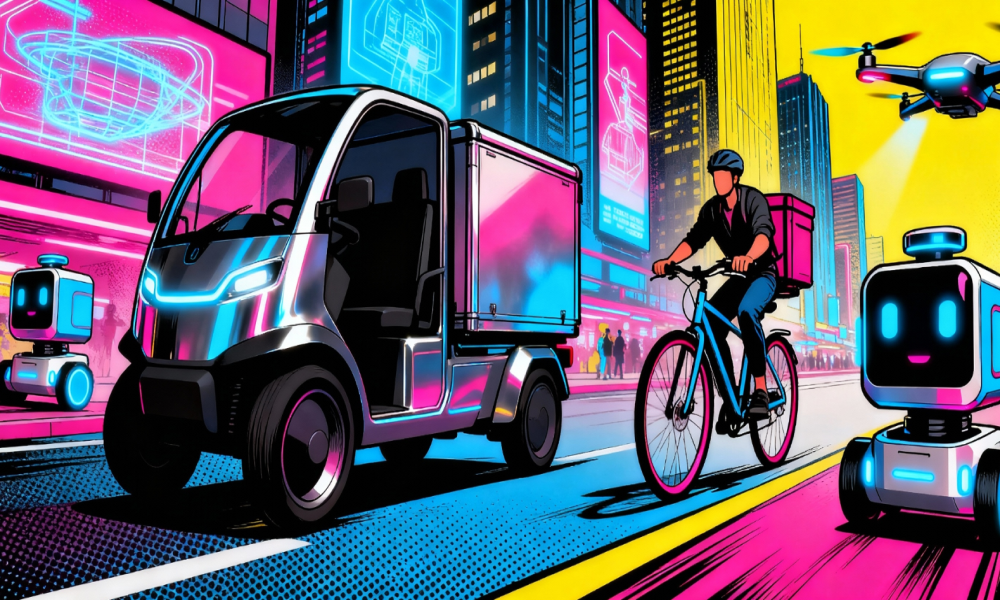
Freight and logistics are the invisible engines of modern life. Every product we consume, every component that fuels industry and every parcel that arrives at our door relies on a complex web of supply chains that span cities, regions and continents. Yet this system, which is so essential to economic vitality, is under unprecedented pressure. Climate commitments, urban congestion, rising customer expectations and global disruptions are forcing the logistics sector to rethink how goods move.
The central question now is: How can technology and innovation reshape freight to be cleaner, smarter and more resilient?
The answer lies in a new generation of digital tools, AI, automation, IoT, Digital Twins and advanced ITS solutions, that are transforming logistics into a connected, sustainable and transparent ecosystem. This article explores how these technologies, combined with forward thinking policy and infrastructure, can deliver a multimodal, future ready logistics system that serves both cities and long haul corridors.
Cities are the beating heart of logistics demand, and the epicentre of its challenges. Congestion, emissions, noise and limited kerbside space make last mile delivery one of the most complex and costly segments of the supply chain. The concept of the 15 minute city reframes urban mobility around proximity, accessibility and sustainability. For logistics, this means designing freight flows that are:
Smart urban logistics is not just about efficiency, it's about creating cities where people and goods can coexist harmoniously.
One of the most promising strategies for sustainable last mile delivery is the deployment of urban consolidation centres (UCCs) and micro hubs. These facilities enable freight to be consolidated outside city centres and redistributed using cleaner, smaller and more agile vehicles. Benefits include:
When combined with digital platforms that coordinate arrivals, departures and loading operations, UCCs become powerful enablers of efficient, low impact urban freight.
Decarbonising logistics requires more than cleaner vehicles, it demands a transformation of the infrastructure that supports them. Key infrastructure priorities include:
Infrastructure readiness is the foundation of sustainable logistics. Without it, even the most advanced technologies cannot scale.
Closed ecosystems such as ports, airports and rail terminals are ideal environments for rapid innovation. Their controlled boundaries, high traffic volumes and operational complexity make them perfect testbeds for advanced ITS solutions. Examples include:
These innovations not only decarbonise operations but also improve throughput, reliability and safety.
The past decade has shown how vulnerable global supply chains can be. From pandemics to geopolitical tensions, extreme weather to labour shortages, disruptions are becoming more frequent and more severe. Technology plays a critical role in strengthening resilience:
Resilience is no longer a competitive advantage, it is a necessity.
Long haul freight is the backbone of global trade and innovation is reshaping how goods move across regions and continents. Key developments include:
Cross border interoperability is essential. Harmonised standards, shared data frameworks and coordinated regulation ensure that long haul logistics can operate smoothly across jurisdictions.
Global supply chains are becoming increasingly complex, with thousands of actors, touchpoints and dependencies. Automation and optimisation technologies are essential to managing this complexity. Examples include:
These tools create supply chains that are not only more efficient but also more transparent and accountable.
Technology alone cannot transform logistics. Policy, regulation and business models must evolve alongside it. Regulatory innovation should focus on:
Meanwhile, new business models, such as shared logistics platforms, subscription based freight services and collaborative distribution networks, are redefining how goods move.
Smart and sustainable logistics is not a distant vision, it is an urgent priority. As cities grow, climate pressures intensify and global supply chains become more complex, the logistics sector must embrace digital transformation at scale. By integrating AI, automation, IoT, Digital Twins and advanced ITS solutions with forward thinking policy and infrastructure, we can build freight systems that are:
The digital era offers a once in a generation opportunity to reimagine logistics. If we seize it, we can create a freight ecosystem that supports thriving cities, sustainable economies and a healthier planet.
More to read here> Articles