150x150.png)

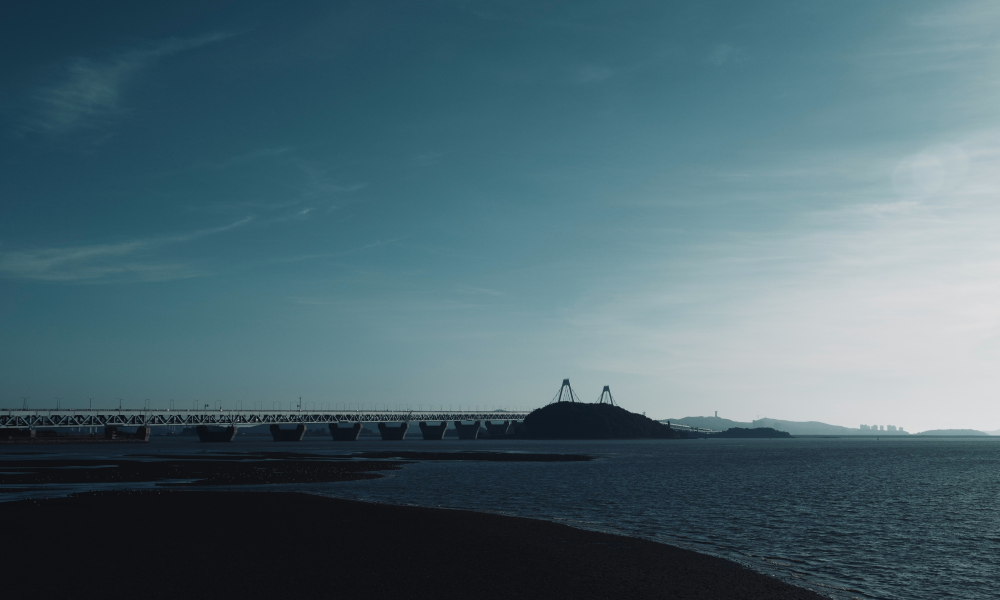
In February 2015, South Korea experienced one of its most severe road traffic disasters when a 100-car pile-up occurred on the Incheon Yeongjong Bridge. Dense sea fog and icy road conditions reduced visibility to just a few metres, leaving drivers unable to see or react to vehicles ahead. The resulting chain-reaction collision caused multiple fatalities and injuries and prompted a nationwide re-examination of how road safety is managed in adverse weather.
The incident exposed a critical weakness in conventional traffic monitoring systems. Many roads still rely heavily on technologies that perform adequately in clear conditions but fail precisely when they are needed most. Cameras and other legacy sensors struggle to provide reliable, real-time information when visibility is compromised by fog, rain, snow, or darkness.
Reflecting on the incident, Euichul Kim, Vice President of Intelligent Transportation Systems at bitsensing, describes to Alistair Gollop the core issue as a “visibility gap” — not only for drivers, but for the infrastructure itself.
“Drivers couldn’t see, and the existing infrastructure couldn’t adequately detect the developing hazard or warn approaching vehicles in time,” he explains. “It painfully demonstrated how legacy sensors and predominantly camera-based safety systems can fail catastrophically when visibility is severely compromised.”
Inductive loop detectors, for example, are embedded beneath the road surface and can detect vehicle presence, but they offer limited insight into real-time traffic dynamics. Installation and maintenance are disruptive, and the data they provide is often insufficient for proactive safety interventions. Camera-based systems, while useful in fair weather, are heavily dependent on lighting and atmospheric clarity. In dense fog or heavy rain, they become effectively blind.
Radar technology offers a fundamentally different approach. Rather than relying on visible light, radar sensors emit radio waves and analyse their reflections to detect objects. This allows them to function reliably in conditions that defeat cameras, including fog, snow, rain, dust, and complete darkness.
“Radar sensors can accurately detect the presence of vehicles, calculate their speed and direction, and determine distance in real time, regardless of weather,” says Euichul Kim. “That capability simply wasn’t available with the infrastructure in place at the time of the bridge incident.”
This all-weather reliability makes radar particularly well suited to high-risk locations such as long bridges, tunnels, mountain passes, and coastal roads where sudden changes in visibility are common. By maintaining consistent situational awareness, radar helps close the visibility gap that legacy systems leave exposed.
Within modern Intelligent Transport Systems, roadside radar sensors are increasingly being deployed to provide continuous, high-quality traffic data. Installed along highways or at strategic points such as bridge approaches, these sensors monitor vehicle flow 24 hours a day, seven days a week.
“Roadside radar allows traffic authorities to detect vehicle counts, speeds, and classifications in real time, irrespective of weather conditions,” Euichul Kim explains. “That means decisions can be based on what is actually happening on the road, not what the weather allows you to see.”
The data collected can feed directly into traffic management centres, enabling dynamic speed limit adjustments, lane closures, early warnings via variable message signs, or proactive dispatch of emergency services. Instead of reacting after an accident occurs, authorities gain the ability to intervene before a situation escalates.
Modern imaging radar systems go far beyond simple presence detection. Using techniques such as radar point clouds, they build a detailed picture of the road environment. This enables accurate vehicle classification — distinguishing cars, trucks, buses, motorcycles, and in some cases vulnerable road users.
“Advanced sensors can track hundreds of objects simultaneously, over hundreds of metres, and refresh that data many times per second,” says Euichul Kim. “This gives traffic managers a granular, real-time understanding of vehicle behaviour, speed differentials, and congestion patterns.”
Such detail is essential for managing complex traffic environments. Knowing not just how many vehicles are present, but what types they are and how they are moving, allows for more precise control strategies and better safety outcomes.
Radar-based ITS solutions are already delivering benefits in cities around the world. In urban environments, radar sensors are being paired with AI-driven analytics to optimise traffic signal timing at busy junctions. By understanding real vehicle flows and classifications, cities can reduce congestion, lower emissions, and improve safety at complex intersections.
“It moves traffic management away from guesswork and outdated data,” notes Euichul Kim. “Decisions are based on precise, real-time information about what is actually happening on the road.”
These deployments demonstrate that radar is not only a safety technology, but also a powerful tool for efficiency, sustainability, and smarter urban mobility.
Looking back at the Incheon Yeongjong Bridge tragedy, it is clear how radar could have altered events. Roadside radar sensors would have detected the rapid slowdown and accumulation of vehicles within the fog bank, even when visibility dropped to near zero.
“That information could have triggered immediate warnings on overhead gantries miles in advance,” explains Euichul Kim. “Speed limits could have been automatically reduced, and drivers alerted before entering the most dangerous zone.”
Early intervention of this kind could have smoothed traffic flow, reduced sudden braking, and significantly mitigated — or even prevented — the scale of the pile-up.
Perhaps the greatest potential of radar-based ITS lies in predictive safety. By continuously analysing traffic flow, speed variance, vehicle density, and environmental conditions, advanced algorithms can identify patterns that often precede accidents.
“Instead of reacting to incidents, systems can identify high-risk situations before they escalate,” says Euichul Kim. “That’s the shift from reactive clean-up to proactive prevention.”
This predictive capability also supports smarter emergency response, enabling faster and safer routing for first responders when incidents do occur.
The key lesson from past tragedies is clear: relying solely on weather-dependent or outdated sensing technologies is no longer sufficient. As road networks grow more complex and climate conditions more unpredictable, resilient, all-weather monitoring becomes essential.
“Radar is an investment in saving lives,” concludes Euichul Kim. “It gives cities the tools they need to understand risk in real time and act before accidents happen.”
For city planners, transport authorities, and infrastructure managers, radar-enabled Intelligent Transport Systems represent a critical step towards safer, smarter, and more resilient roads.
Click the buttons below to see more articles:
See all ArticlesIndustry InsightEventsITS Thought LeadershipITS Educational