150x150.png)
Many people assume that traffic signals emerged alongside the rise of motor vehicles, yet the foundations of modern signalisation were laid decades earlier. Long before roads were dominated by cars, engineers and scientists were grappling with the challenge of how to communicate movement, warning and control, at a distance. The history of signals is rooted in two distinct but ultimately converging fields: communication and navigation.
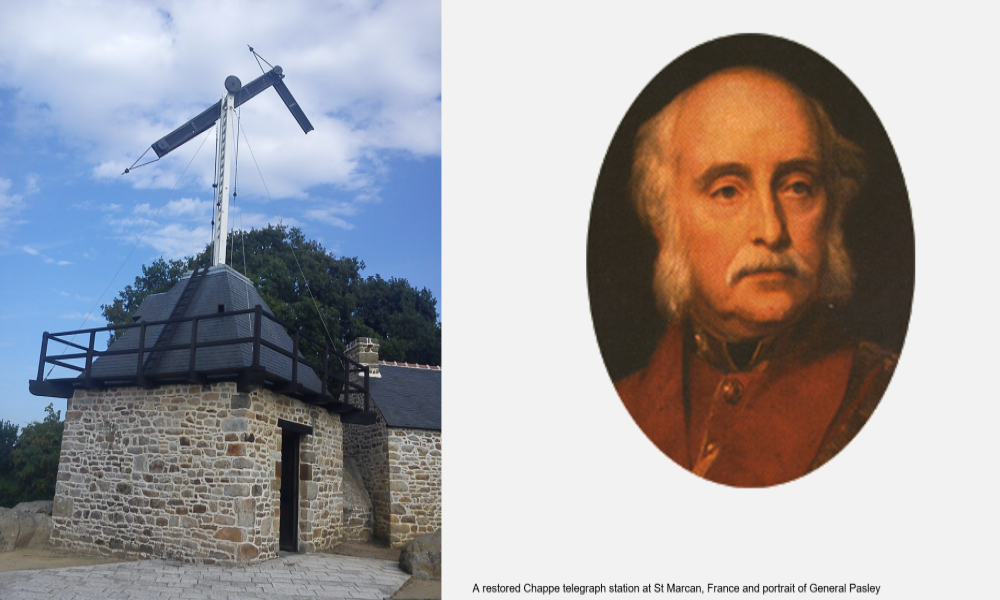
In Britain, much of this early work was driven by the needs of the Admiralty in the late eighteenth century. Rapid communication between London and naval ports along the south coast was essential for national security. To achieve this, a chain of optical telegraph stations was constructed, allowing messages to be relayed visually across long distances using mechanical arms and fixed signalling codes.
The optical telegraph system continued to evolve into the early nineteenth century, influenced by innovations observed in France. General Pasley, after studying the semaphore system developed by Claude Chappe, helped bring this refined approach to Britain. From 1816, semaphore-style telegraphs became widely adopted, establishing a clear visual language of position, movement, and meaning.
These principles later found a natural home on the railways. As rail travel expanded, so too did the risk of accidents. In response, semaphore signals were adapted to communicate directly with locomotive drivers. One of the earliest railway semaphore signals was installed in 1841 at New Cross by Charles Hutton Gregory of the London and Croydon Railway. This marked a critical step in applying signalling technology to moving traffic.
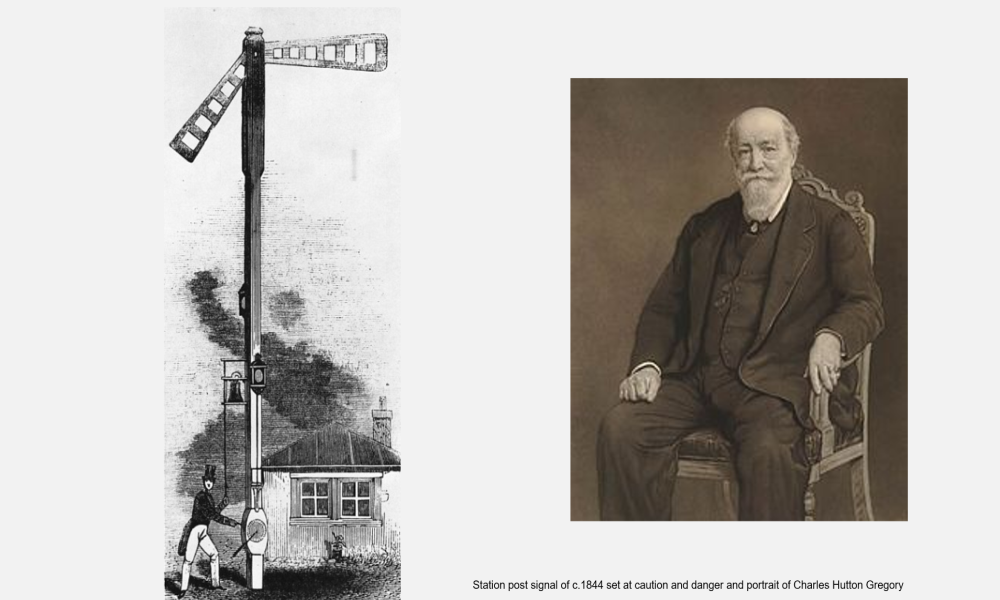
Semaphore signalling proved highly effective for railways and would go on to be adopted extensively across the network. Its success demonstrated that clear, standardised visual signals could dramatically improve safety and efficiency where vehicles shared constrained routes.
At sea, a different but related problem was unfolding. The introduction of steam-powered vessels in the mid-nineteenth century led to a sharp increase in maritime collisions. Following investigations by Parliamentary committees and subsequent studies, attention turned to the use of coloured lights as a means of communicating a vessel’s direction and movement.
Experiments showed that oil lamps fitted with clear, red, and green lenses offered the best visibility at distance with minimal risk of confusion. The outcome was a landmark recommendation: red and green lights should be used as navigation sidelights. This system was universally adopted in 1858 and remains fundamental to maritime navigation today.
Crucially, this work established colour as a powerful and intuitive signalling tool. The association of red and green with movement, caution, and control would later become central to road traffic signalling.
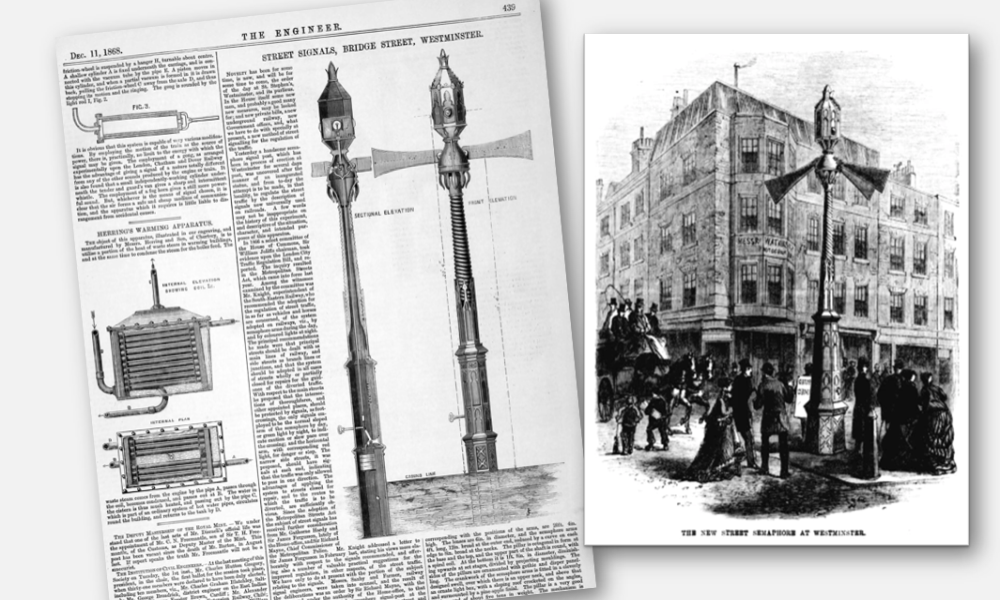
By the mid-nineteenth century, London was facing increasing congestion on its streets. In response to a recommendation from a Parliamentary Select Committee, the world’s first traffic signal was installed in December 1868 on Bridge Street, adjacent to the Houses of Parliament. Its purpose was simple but revolutionary: to allow Members of Parliament to cross the road safely.
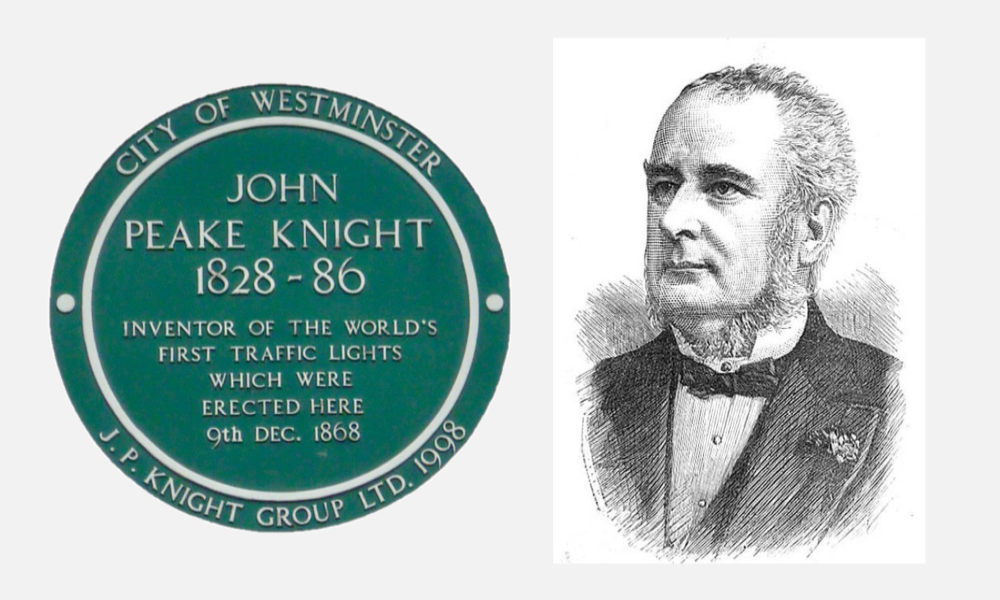
Promoted by railway engineer John Peake Knight, the signal stood over twenty feet high and closely resembled railway semaphore technology. A horizontal arm indicated “stop”, while a lowered arm at forty-five degrees signalled “proceed with caution”. Red and green gas lamps at the top of the pole reinforced the message during hours of darkness.
Operation of the signal was entirely manual, with a police officer controlling it using a handle. Despite its promise, the installation was short-lived. In January 1869, leaking gas caused an explosion that injured the officer on duty, and the signal was removed. Although brief, this experiment marked the first attempt to regulate road traffic through dedicated signalling.
After the Bridge Street installation, few attempts were made at traffic signalisation in the UK for several decades. A notable exception was Tower Bridge in London. When the bridge opened in 1894, it incorporated a sophisticated interlocking system designed by Saxby and Farmer to control both river and highway traffic.
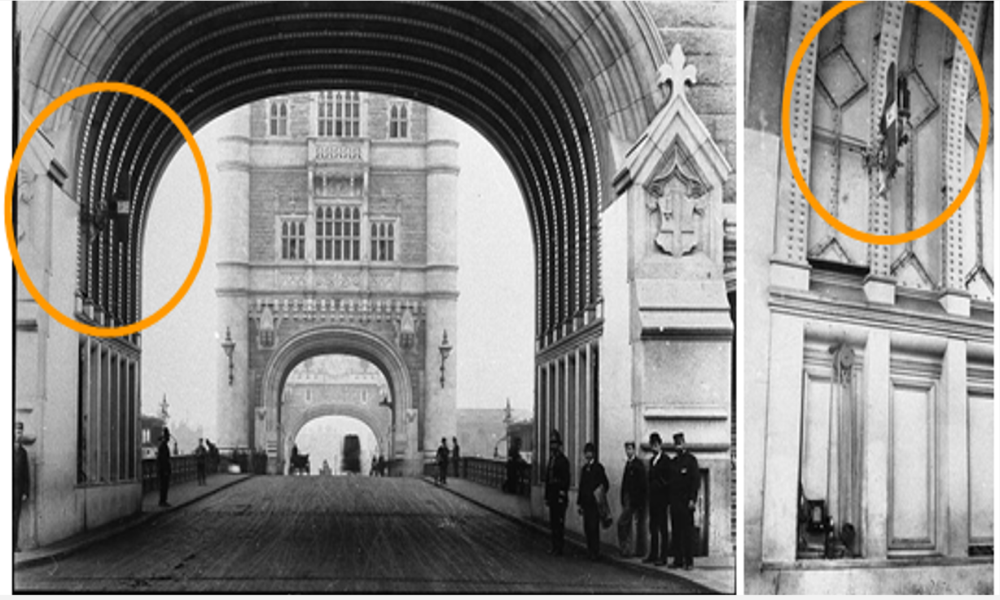
Semaphore signals fitted with red and green gas lights were used in coordination with the bridge’s lifting mechanisms. These signals ensured that road vehicles and river vessels could be managed safely as the bridge opened and closed. Elements of the original mounting hardware remain visible today, and the site continues to function as a signalised location, making it arguably the oldest in continuous operation.
The widespread adoption of motor vehicles in the early twentieth century created an urgent need for more reliable and scalable traffic control. In the United States, inventors experimented with both semaphore-based systems and light-based signals. While semaphore designs persisted for a time, it became increasingly clear that electric light signals offered greater flexibility.
The first electric traffic light was installed in Salt Lake City in 1912. It used red and green lamps housed in a wooden box and was operated manually by a police officer. Although basic, it demonstrated the potential of electrically powered signals for managing road traffic.
A major breakthrough came in 1920, when a Detroit police officer developed the first three-colour traffic signal. By introducing amber between red and green, this design created the familiar sequence still used today and significantly improved safety at junctions.
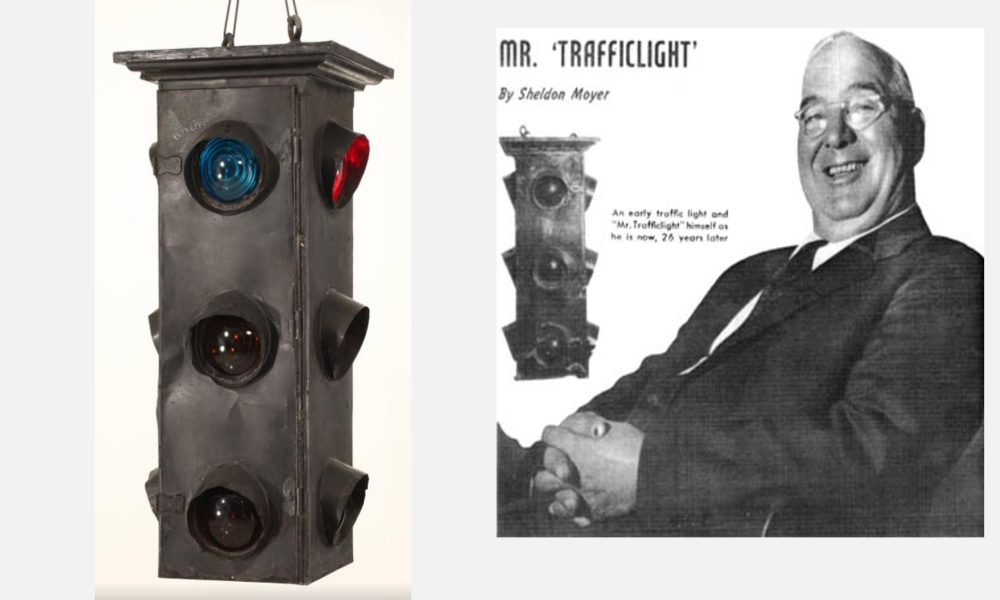
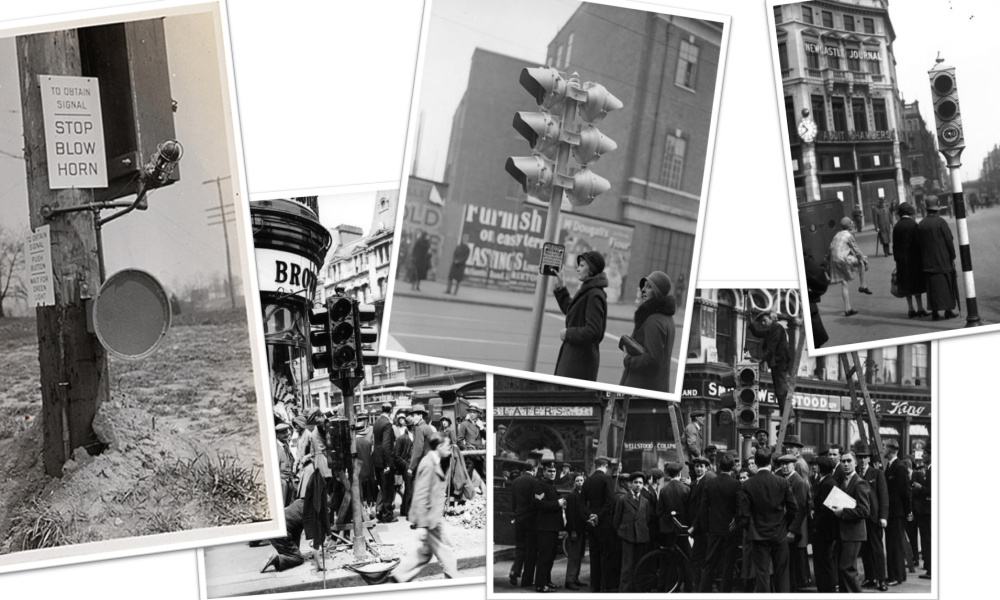
Europe soon followed these developments. In 1924, electric traffic signals were installed at Potsdamer Platz in Berlin, mounted on a five-sided police tower and manually controlled. In England, manually operated electric signals appeared in London in 1925, followed by the first automatically controlled signals in Wolverhampton in 1927.
The 1930s saw further innovation with the introduction of vehicle detection. Early experiments even included microphones that responded to vehicle horns, though these proved unpopular. More successful were pressure mats and pneumatic tubes, which eventually gave way to inductive loop technology that remains widely used.
Late 18th century – Optical telegraph stations established to link London with naval ports along the south coast.
1816 – Semaphore-style telegraph adopted in the UK following European innovations.
1841 – First railway semaphore signal installed at New Cross in London.
1858 – Red and green navigation lights adopted universally for maritime use.
1868 – World’s first road traffic signal installed at Bridge Street, London.
1894 – Tower Bridge opens with integrated semaphore signals for road and river traffic.
1912 – First electric traffic light installed in Salt Lake City.
1920 – Introduction of the first three-colour electric traffic signal.
1927 – First automatically controlled traffic signals installed in the UK.
Modern traffic signals now employ advanced detection, automation, and digital control, yet their foundations remain firmly rooted in these early experiments. From semaphore arms and gas lamps to electric lights and vehicle actuation, the evolution of signals reflects a continuous effort to make movement safer, clearer, and more predictable.
Understanding this history provides valuable context for today’s intelligent transport systems. The challenges faced by early engineers—visibility, interpretation, and coordination—are the same challenges addressed by modern technology, albeit with far more sophisticated tools. The story of signals is, at its core, a story of human ingenuity responding to the growing complexity of movement.
To find out lots more about the history of traffic signals, try watching our video about the subject on the @ITSNow YouTube Channel -Click the buttons below to see more articles:
See all ArticlesIndustry InsightEventsITS Thought LeadershipITS Educational