150x150.png)
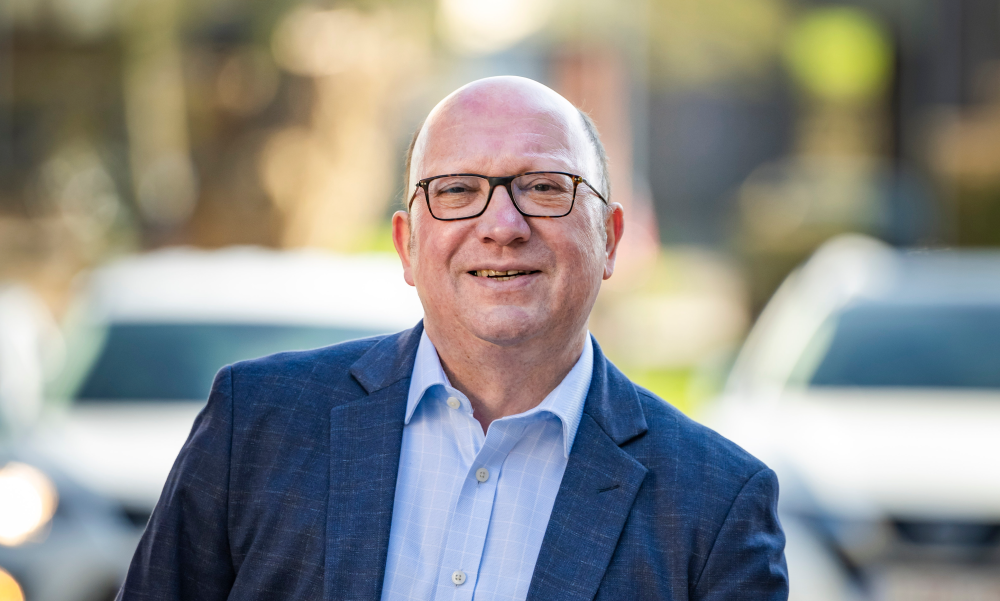
Alistair Gollop sat down with ERTICO CEO Joost Vantomme to discuss how the upcoming Congress will translate 'Clean, Resilient and Connected Mobility' from buzzwords into tangible actions, leveraging AI, data and unprecedented collaboration.
The world of transport is evolving at an unprecedented pace, driven by technological innovation, environmental imperatives, and shifting societal needs. At the heart of this transformation lies Intelligent Transportation Systems (ITS), the intricate web of technologies and strategies designed to make mobility safer, more efficient, and sustainable. This May, the European ITS community converges on Seville, Spain, for the 16th ITS European Congress, organised by ERTICO – ITS Europe. Under the compelling theme of 'Clean, Resilient and Connected Mobility,' the event promises not just discussion, but a showcase of practical solutions and collaborative blueprints for Europe's transport future.
Joost Vantomme, CEO of ERTICO – ITS Europe, emphasizes that the theme is far more than just aspirational phrasing. "These are not just words," he asserts. "We want to bring this into practice and to reality through demonstrations, through, of course, exhibition, but also a lot of sessions." With over 100 technical sessions and a similar number of special interest sessions packed into three days, the Congress aims to be a melting pot of thought leadership, uniting academics, policymakers, government authorities, private industry and research organisations.
The core challenge lies in translating the interconnected concepts of 'clean', 'resilient' and 'connected' into actionable strategies. Vantomme highlights the pivotal role of data and Artificial Intelligence (AI) in achieving this. "It's not only about ChatGPT and Copilot," he clarifies. "It's definitely about the potential of data for traffic management... AI is one of the technologies, and we're going to explain and showcase how predictive it can work." This translates into tangible applications: predictive analytics for data-driven decision-making, optimising traffic flow to reduce congestion and emissions (hitting the 'clean' target), and enhancing situational awareness. Vantomme points to the potential for predicting the impacts of nature and climate change on transport infrastructure, enabling proactive measures – a crucial aspect of 'resilience'. Connectivity is the enabler, linking vehicles, infrastructure, and even adjacent sectors like aviation. Policy provides the framework. Vantomme notes the significance of the European data strategy, including the AI Act and Data Act, alongside the overarching ITS Directive. A key focus will be the delegated acts under this directive, such as the one concerning safety-related traffic information. ERTICO's 'Data for Road Safety' platform, a collaborative effort involving vehicle manufacturers, road authorities, and service providers, will be showcased. "How can we help... the driver see that, for example, there is a slippery road, or there are temporary roadworks... Instead of looking at the road and realising it probably too late, we can inform the driver much earlier," Vantomme explains. Real-time traffic information, delivered directly via in-vehicle systems or apps rather than passively through radio, is another crucial element. The Congress will also delve into emerging frontiers like Urban Air Mobility (UAM), building on initiatives launched at the ITS World Congress in Dubai, and exploring the complexites of Mobility Data Spaces – what they are, how they function, the necessary regulations, and the imperative of EU-wide interoperability.
The choice of Seville as the host city is no coincidence. Recognised by the European Commission as one of the 100 climate-neutral and smart cities aiming for neutrality by 2030, Seville offers a compelling case study. "Seville has very good cards in its hands," says Vantomme. He points to the 'e-city Seville' project within the Cartuja district, a model low-emission zone featuring extensive electric vehicle charging infrastructure, real-time energy monitoring, and the integration of innovative cooling technologies to combat the city's intense heat – all enabled by ITS. Furthermore, Seville boasts a remarkable transformation in active mobility. Since 2006, its cycling network has exploded from 12 km to over 180 km, supporting roughly 70,000 daily bike trips facilitated by a comprehensive bike-sharing system and real-time data apps. This commitment to sustainable urban transport provides invaluable lessons for other European cities grappling with similar challenges. The Congress aims to be a conduit for this knowledge transfer.
A recurring theme in Vantomme’s vision for the Congress is the deliberate fostering of cross-sector collaboration. The goal is to break down silos and develop holistic solutions. "What we wanted to avoid is pre-scripted sessions... where everybody knows everybody. No, you will not see that," he states firmly. Plenary sessions are designed to reflect this, bringing together high-level representatives from the European Commission, Spanish national and regional governments, the City of Seville, industry leaders, and academia. The Special Interest Sessions (SIS) dive deeper into specific topics – from AI in traffic management to managing urban space scarcity through Urban Vehicle Access Regulations (UVARs) – always with a focus on public-private dialogue. A new feature this year is the 'ITS Arena' within the exhibition hall. Envisioned as a dynamic space, it will host hourly 'mini TED Talk' style presentations showcasing cutting-edge trends and societal innovations, moving beyond simple product pitches. Coupled with numerous technical demonstrations allowing hands-on experience with new technologies, both at the venue and around Seville, the emphasis is on tangible interaction. Crucially, the Congress kicks off with a closed 'Summit of Cities and Regions on Smart Mobility,' bringing mayors and city officials together with the EU Commission and ERTICO to specifically address sustainable urban mobility challenges from the municipal perspective. And, of course, ample networking opportunities are built-in, facilitating not just business deals but vital relationship building across the diverse ITS ecosystem.
Beyond the technology and policy, Vantomme stresses the importance of the human dimension. A major hurdle, he acknowledges, is public perception and acceptance. "When you come out of your bubble... and talk to Alistair in the street... you will sometimes not receive a very good reception; they don't understand. They don't see the need for it and they don't want to pay for it." Therefore, the Congress will actively focus on the 'user's perspective' – understanding user needs before developing solutions and ensuring technologies are accessible and equitable. This includes a conscious effort towards greater inclusivity, particularly addressing the gender imbalance prevalent in the ITS industry. "We want to have another angle on equity, is to have much more women on board," Vantomme notes. Resilience, too, extends beyond infrastructure to encompass cybersecurity. "In these geopolitical worlds... it's a lot of hybrid things that we see through cyber-attacks. So cyber resilience is important, next to the physical, nature-related resilience," he emphasizes, highlighting its critical importance for the transport sector.
Ultimately, the ITS European Congress serves ERTICO's core mission: strengthening the competitiveness of the European intelligent transport industry. It provides a vital "gateway," as Vantomme puts it, for companies large and small, research institutions, and public authorities. It’s a platform to showcase innovation (B2B, B2C, B2G), test and demonstrate new technologies, engage with potential procurers who may not be familiar with the latest advancements, and absorb thought leadership on global trends. "If you come out after 3 days of this Congress in Seville," Vantomme concludes, "first of all, you will be very tired, I guess, but very full of new wisdom and new energy actually to drive your business or your academic insights and policy forwards." As Seville prepares to welcome the ITS community, the stage is set not just for discussion, but for concrete progress. By tackling the intertwined challenges of clean, resilient, and connected mobility head-on, fostering genuine collaboration, and keeping the human element central, the 2025 ITS European Congress aims to chart a course towards a smarter, more sustainable transport future for all of Europe.
Watch the whole interview on the @ITSNow YouTube Channel -
See the video
Click the buttons below to see more articles:
See all ArticlesIndustry InsightEventsITS Thought LeadershipITS Educational