150x150.png)
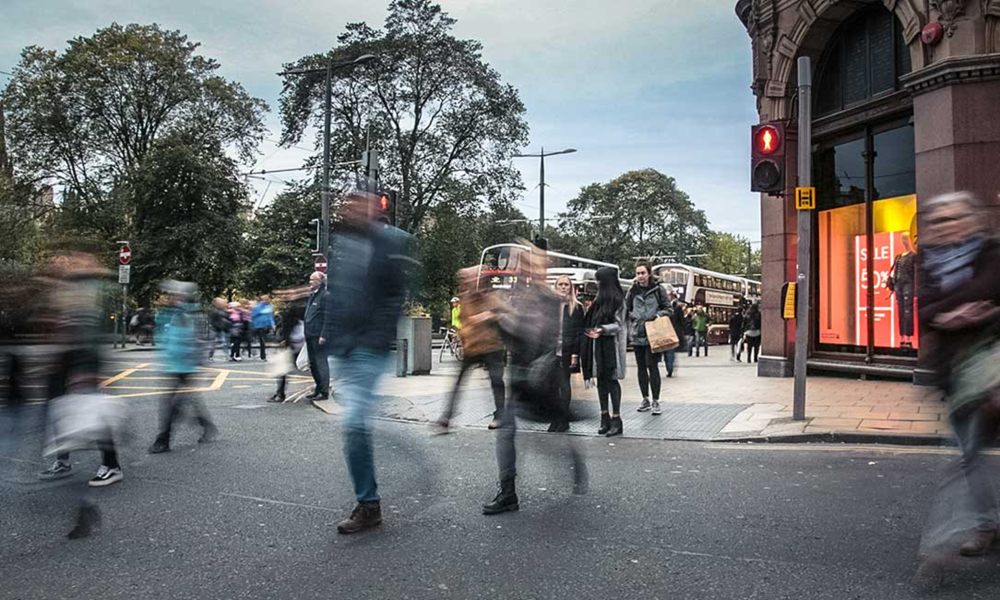
Traffic Signal Controllers are designed to operate under a variety of different modes, often referred to as methods of control. These modes allow a signalised junction to respond appropriately to changing traffic conditions, operational requirements, and fault scenarios. The specific modes available at any given site depend on the configuration programmed into the controller and the facilities provided during its design and commissioning.
In this article, we explore how operating modes are structured within a controller, how priority is assigned between them, and how timetable entries influence their use. We then look in detail at three fundamental modes of operation: Manual, Fixed Time, and Vehicle Actuated control.
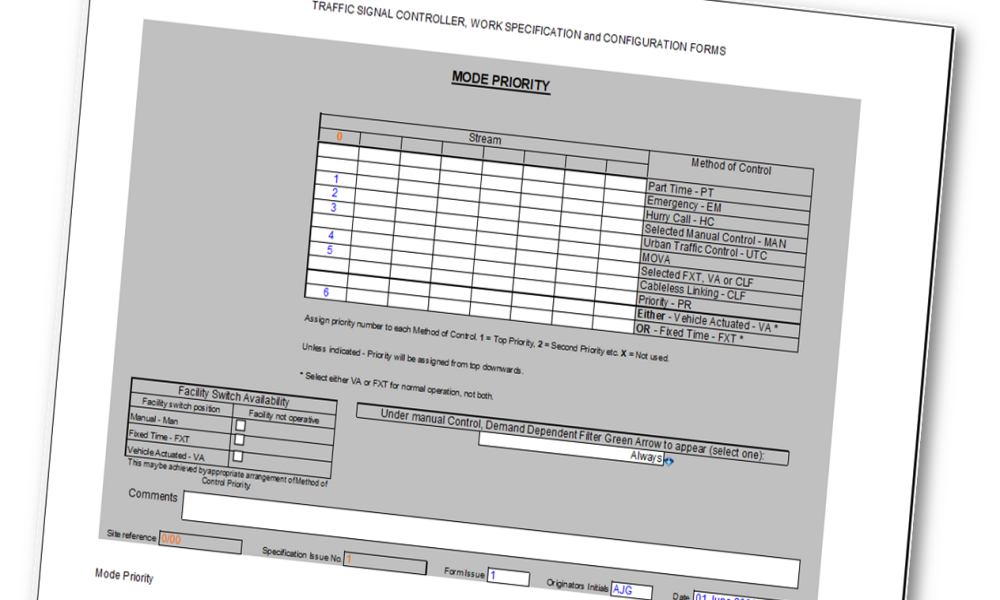
Traffic Signal Controllers typically operate using a hierarchy of modes defined within a mode priority table. This hierarchy ensures that the most appropriate mode is active at any given time, while allowing higher-priority modes to override lower-priority ones when necessary.
The normal mode of operation at many urban junctions is not the highest-priority mode. For example, a controller may normally operate under an Urban Traffic Control (UTC) mode, which allows it to benefit from network-wide coordination. However, higher-priority modes such as Manual control or external inputs like a hurry call can override UTC when required.
Lower-priority modes are often provided for resilience. If the preferred mode becomes unavailable due to a fault, such as a loss of communications, the controller will automatically fall back to an alternative mode. This ensures that the junction continues to operate safely and efficiently even under degraded conditions.
Timetable entries provide additional flexibility by allowing certain modes to be introduced or removed at predefined times. This enables different operational strategies to be used throughout the day or week, reflecting variations in traffic demand.
During peak periods, coordinated operation between adjacent junctions can deliver significant benefits by smoothing traffic flows and reducing delays. However, during quieter periods, maintaining coordination may cause unnecessary delays for vehicles and pedestrians. In such cases, it can be advantageous to drop from coordinated modes to isolated operation, such as Vehicle Actuated control.
Manual mode is the simplest form of control and is intended for use in exceptional circumstances, such as incidents or emergencies. It allows an engineer or police officer to directly control the Traffic Signal Controller on site.
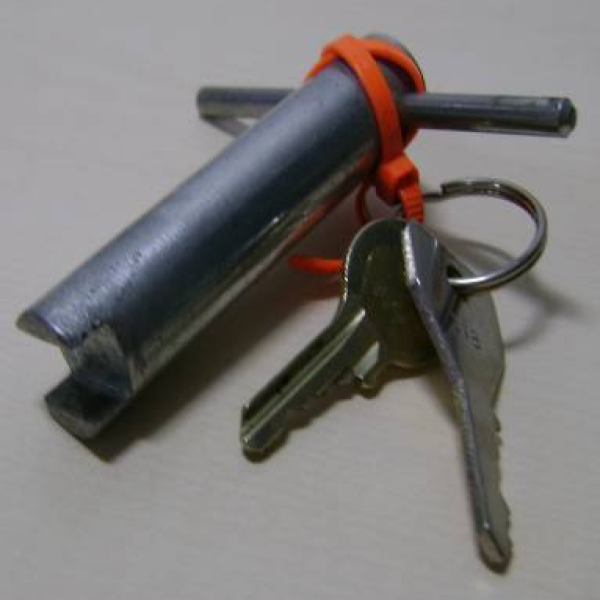
Access to manual control is provided via a dedicated control panel located behind a small, locked door on the outside of the controller cabinet. This door is typically secured using a standard “900” key, allowing authorised personnel access without exposing the internal components of the cabinet.
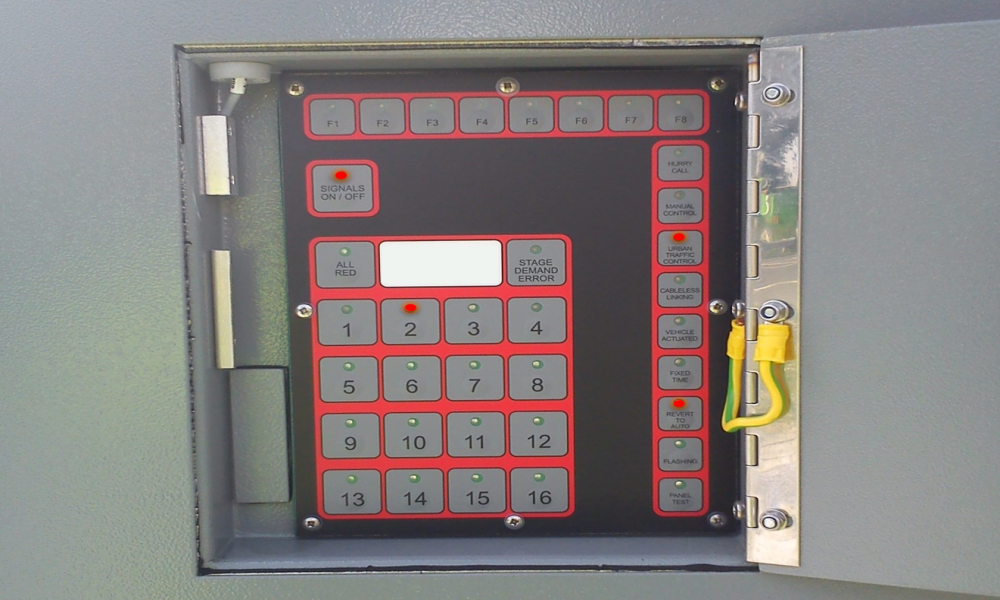
The manual panel includes switches that allow pre-programmed stages to be selected. At single-stream sites, these switches usually correspond directly to stage numbers. At multi-stream sites, each switch may select a combination of stages across different streams. Additional controls are provided for all-red operation, signal on/off selection, and mode selection.
Indicators on the panel show which stages are currently running and which mode the controller is operating in. A sensor on the panel door notifies the controller when the door is opened, and the door state can be reported automatically to the UTC centre. In many cases, closing the door will automatically override manual mode.
Some authorities require additional validation before manual mode can be used. This may involve contacting the UTC centre to enable access remotely or entering a password via an engineer’s handset port. To assist users, a stage diagram is often provided inside the panel door, although space constraints can make this challenging for complex junctions.
In Fixed Time mode, the controller cycles through a predefined sequence of stages in a fixed order. Each stage runs for a predetermined duration, regardless of whether there is any traffic demand for the phases within it.
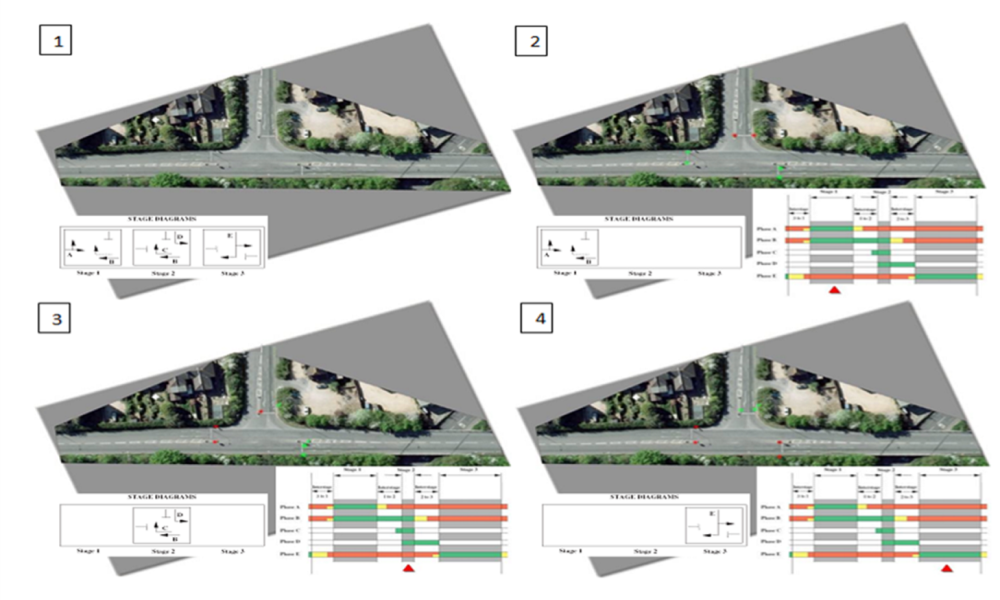
Modern controllers do, however, offer some flexibility within Fixed Time operation. Phases can be made demand-dependent, allowing lightly used phases, such as minor side roads or pedestrian crossings, to be omitted when there is no demand. This helps reduce unnecessary delays on opposing traffic movements.
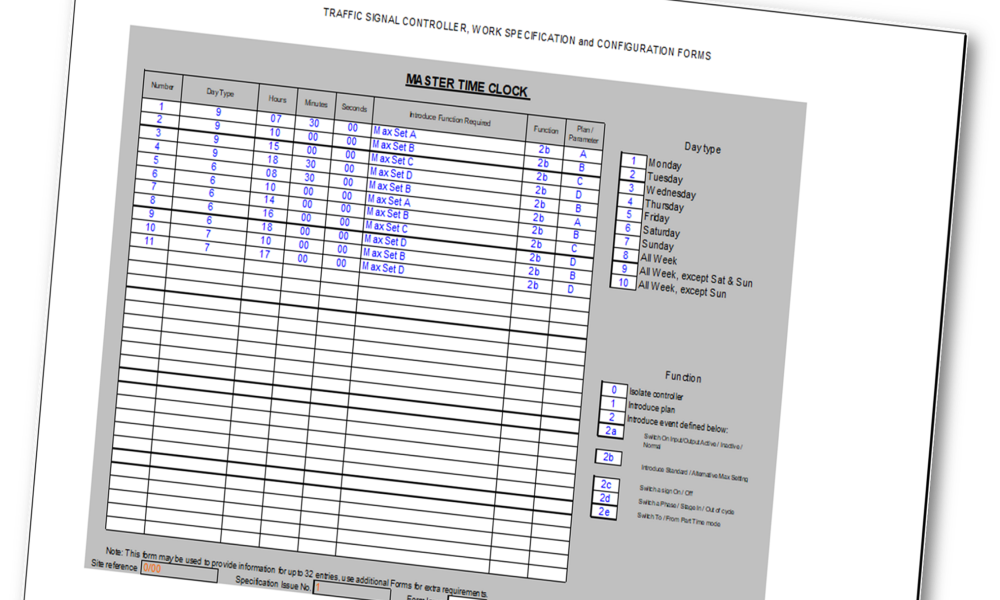
The duration of each stage is governed by the maximum green timings of its constituent phases. Controllers can be programmed with multiple sets of maximum timings, which can be selected based on time-of-day and day-of-week criteria defined in the timetable. This allows the controller to accommodate variations in traffic flow, such as peak periods, inter-peak times, overnight operation, and weekends.
Fixed Time operation is most effective when a junction is operating close to capacity, where predictable traffic patterns justify fixed allocations of green time. However, it can introduce unnecessary delays during quieter periods and does not provide coordination with adjacent junctions unless combined with other facilities. One advantage of FXT is that it requires minimal detection equipment.
Vehicle Actuated mode addresses the lack of flexibility inherent in Fixed Time operation by allowing the controller to respond dynamically to traffic demand. VA relies on detection equipment, such as inductive loops or above-ground detectors, to identify the presence of vehicles approaching the junction.
When no demands are present, the controller reverts to a quiescent stage. Traditionally, this was the main road stage, but increasingly it may be a pedestrian or all-red stage. The controller remains in this state until a new demand is detected.
As vehicles approach the junction and pass over detection loops, demands are inserted for the associated phases. These demands are latched, meaning they remain in place until the phase is serviced by displaying a green signal.
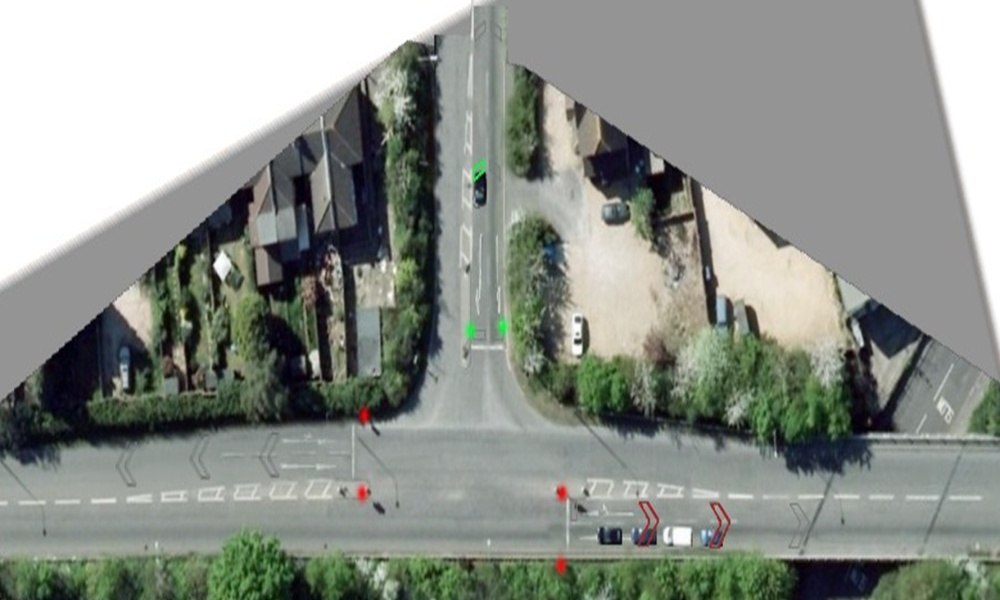
When a stage becomes active, it will run for at least the minimum green period of its constituent phases. Once this minimum has expired, the stage may either terminate or continue running if demands persist. As vehicles are detected while a phase is green, extension times are added, typically in increments of around 1.5 seconds for standard System D loops.
If no further vehicles are detected during an extension period, the stage will gap out and terminate. If demands exist for phases in other stages while the current stage is being extended, maximum green timers are initiated. The stage will continue until either the extensions cease or the maximum green is reached.
To prevent vehicles from being trapped near the stop line, a revertive demand is inserted if an extension is still active when the maximum green timer expires. This ensures that the phase will reappear and safely clear the queued traffic.
Traffic Signal Controllers rely on a structured hierarchy of operating modes to balance efficiency, safety, and resilience. Manual mode provides direct control in exceptional circumstances, Fixed Time mode delivers predictable operation under stable conditions, and Vehicle Actuated mode offers responsive control based on real-time demand.
Understanding how these modes operate and interact is fundamental to effective traffic signal design, operation, and maintenance. By selecting the appropriate mode for the prevailing conditions, traffic authorities can minimise delay, improve safety, and make best use of available infrastructure.
To find out lots more about traffic signal principles, try watching our video about Manual, VA & Fixed Time on the @ITSNow YouTube Channel -
See the video
Our books, Traffic Signals and Traffic Control also provide much more information on this subject, see our Publications page -
Publications
Click the buttons below to see more articles:
See all ArticlesIndustry InsightEventsITS Thought LeadershipITS Educational