150x150.png)
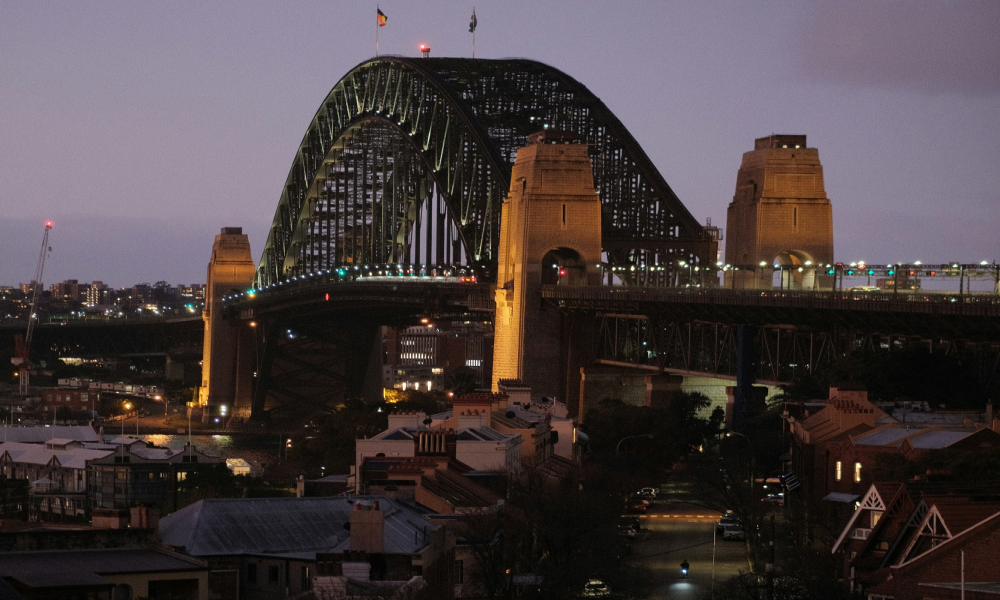
Sydney has once again positioned itself at the forefront of global mobility innovation as the International Conference on Transportation & Logistics Technology (ICTLT) unfolded this week. With Australia accelerating its ambitions around sustainable transport, automation and supply-chain resilience, the conference arrived at a moment when the sector is hungry for practical solutions and strategic direction. What emerged was a clear picture of an industry shifting decisively from experimentation to implementation.
As one Australian transport agency director put it during a plenary session, “We’re no longer talking about pilots, we’re talking about platforms. The question now is how fast we can scale.” That sentiment echoed across the event.
A defining theme throughout ICTLT was the evolution of Intelligent Transport Systems from isolated tools into the coordinating intelligence behind entire multimodal networks. Speakers emphasised that the future of mobility lies not in adding more modes, but in enabling the modes we already have to work together seamlessly.
Real-time data sharing between buses, rail, ferries and micro-mobility providers is beginning to reshape how cities manage movement. Machine-learning-driven traffic signal optimisation is no longer a research concept but an operational reality in several Australian cities, where adaptive systems are smoothing flows and reducing congestion. Public transport agencies are increasingly turning to unified management platforms that give operators a single, integrated view of their networks, a shift that is already improving reliability and passenger experience.
Freight and logistics technology, long overshadowed by passenger mobility in public discourse, took a well-deserved place in the spotlight. Australia’s freight task continues to grow and ICTLT made it clear that the next wave of efficiency gains will come from digital intelligence rather than physical expansion.
RFID-enabled visibility across intermodal networks is delivering measurable improvements in performance and risk management. Digital twins of logistics hubs (once the domain of high-end research labs) are now being deployed to optimise yard operations, vehicle movements and energy consumption. Agent-based simulation tools are helping planners stress-test supply chains against disruption scenarios, from extreme weather to port congestion.
One logistics technology specialist summed it up neatly: “The smartest kilometre in the supply chain is now the digital one. If you can see it, you can optimise it.”
Sustainability has moved from a policy aspiration to a design requirement. Across sessions on environmental protection, transport planning and system optimisation, the message was consistent: emissions reduction must be embedded into every layer of mobility planning.
Energy-optimised traffic management is reducing idling and smoothing flows in urban centres. Hydrogen-powered freight corridors and electrified bus depots are transitioning from pilot projects to scalable infrastructure. Planners are increasingly adopting lifecycle-based approaches to infrastructure investment, ensuring that environmental impact is assessed alongside cost and capacity.
With Australia’s major cities committed to ambitious net-zero transport strategies, ITS is emerging as the operational backbone that makes those commitments achievable.
As climate-driven disruptions and cyber threats become more frequent, the sector is shifting from reactive responses to predictive, data-driven models. Presenters demonstrated how predictive analytics can identify high-risk conditions before incidents occur, enabling proactive interventions.
Cybersecurity experts emphasised the importance of secure-by-design architectures for connected vehicles, roadside units and cloud platforms, a critical consideration as connectivity becomes ubiquitous. Emergency response coordination systems are evolving into integrated digital platforms that bring together transport operators, police and emergency services, improving situational awareness and response times during major incidents.
High-fidelity simulation and digital modelling are rapidly becoming indispensable tools for planners and operators. Whether modelling traffic flow, evaluating new ITS deployments, or designing freight networks, simulation is enabling agencies to test interventions virtually before deploying them on the ground, reducing risk, accelerating implementation and improving outcomes.
Agent-based models are helping researchers understand multimodal behaviour at a granular level, while performance measurement frameworks are enabling agencies to evaluate the real-world impact of ITS investments.
What stood out across the conference was the growing recognition of Australia as a global testbed for mobility innovation. ICTLT sits within a broader ecosystem of transport events taking place across the country this year, covering everything from sustainable mobility to traffic flow theory and transportation safety. This clustering of activity reflects a nation investing heavily in the future of mobility and attracting international attention in the process.
Delegates from Europe, Asia and North America noted Australia’s leadership in areas such as connected corridors, electrification and multimodal research. For many, Sydney served not just as a conference venue but as a living laboratory of ITS deployment.
Perhaps the most striking shift at ICTLT 2026 was the move from conceptual frameworks to real-world implementation. Many presentations focused on systems already in operation, rather than theoretical models or long-term visions. Cross-agency collaboration (historically a challenge in the transport sector) is becoming more common as operators recognise the value of shared data and coordinated planning.
Performance measurement is maturing, with agencies increasingly focused on KPIs that demonstrate tangible improvements in safety, efficiency and sustainability. The sector is no longer asking why ITS matters; it is now focused on how to scale it effectively and equitably.
As the conference drew to a close, the direction of travel for the mobility sector felt unmistakable. Intelligent Transport Systems are no longer niche technologies, they are the strategic backbone of modern mobility. From multimodal integration to freight optimisation, from sustainability to safety, ITS is shaping how cities and supply chains operate.
Sydney’s role as host underscored Australia’s growing influence in the global ITS community and the insights emerging from ICTLT will undoubtedly help shape the next wave of transport transformation.
The future of mobility is intelligent, integrated, sustainable and data-driven, and judging by the momentum in Sydney this week, it is arriving faster than many expected.
Click the buttons below to see more articles:
See all ArticlesIndustry InsightEventsITS Thought LeadershipITS Educational