
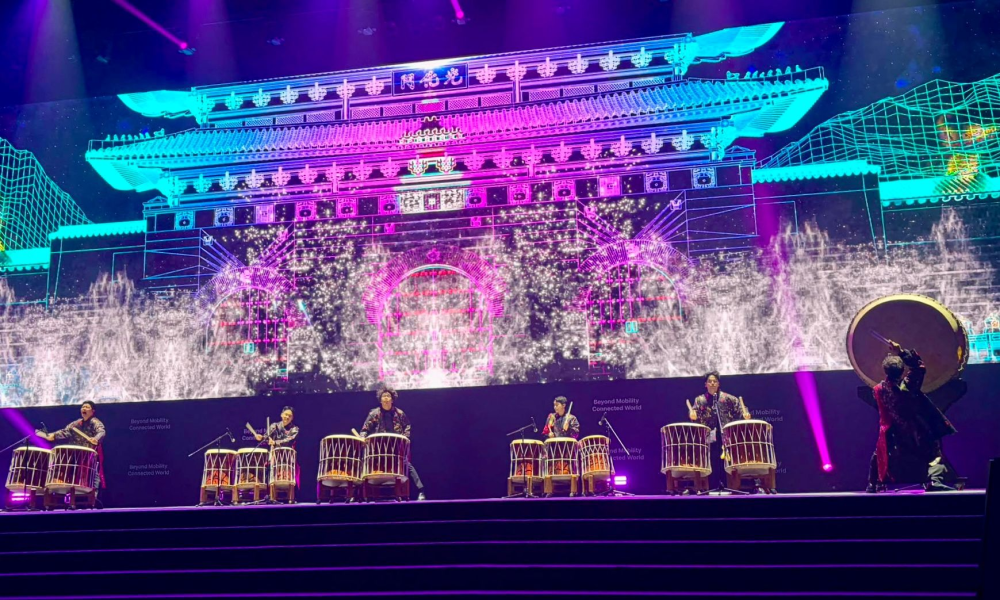
Day two of the 2026 ITS World Congress in Gangneung promises to unfold with a different tempo from the opening day, shifting the focus from broad thematic framing to the detailed exploration of technologies, policies and deployments that define the sector’s current trajectory. Delegates will arrive with a clearer sense of the Congress’s character after the first day’s sessions, ready to engage with a programme that leans more heavily into technical depth, practical implementation and the realities of scaling intelligent transport systems across diverse environments. The city’s calm coastal backdrop continues to provide a striking contrast to the intensity of the discussions taking place within the Convention Centre, yet the atmosphere remains one of purposeful momentum.
The second day agenda places a strong emphasis on connected mobility, reflecting the sector’s recognition that interoperability is no longer an aspirational concept but a practical necessity. Sessions dedicated to cooperative systems will examine how cities and regions are moving from pilot deployments to operational networks, with speakers expected to share insights into the challenges of integration, maintenance and long-term governance. Delegates will be looking closely at examples where C-ITS has delivered measurable improvements in safety and efficiency, particularly in urban corridors where traffic complexity demands rapid and reliable communication between vehicles and infrastructure. The shift from demonstration to sustained operation is likely to be a recurring theme, highlighting the maturity of technologies that once sat on the fringes of mainstream transport planning.
Automation will also feature prominently throughout the day. The Congress has always been a platform for showcasing autonomous vehicle innovation, yet tomorrow’s sessions are expected to focus less on the vehicles themselves and more on the ecosystems required to support them. Discussions will explore the interplay between sensing, mapping, connectivity and regulation, with particular attention given to the operational realities of autonomous shuttles and freight platforms. Delegates will hear from cities that have begun integrating autonomous services into public transport networks, offering valuable perspectives on ridership patterns, public acceptance and the complexities of managing mixed traffic environments. The tone is likely to be pragmatic rather than speculative, reflecting the industry’s shift towards evidence-based deployment strategies.
Digital infrastructure forms another pillar of the programme. Several sessions will examine the evolution of traffic management platforms, data governance frameworks and real-time analytics. The growing importance of digital twins will be explored in detail, with presenters expected to demonstrate how virtual modelling environments can support planning, operations and resilience. Delegates will be keen to understand how these tools are being used to simulate emergency scenarios, optimise signal timing and evaluate the impacts of new mobility services. The conversation is likely to extend beyond technology to the organisational structures required to manage data effectively, particularly in regions where responsibilities are distributed across multiple agencies.
Sustainability remains a central thread running through the Congress, and sessions will continue to explore how intelligent transport systems can support environmental goals. Presentations on electric vehicle infrastructure will examine the challenges of scaling charging networks, integrating renewable energy and managing grid impacts. Delegates will hear from operators who are experimenting with dynamic pricing, load balancing and predictive maintenance to improve reliability and efficiency. The role of ITS in supporting active travel will also be discussed, with speakers highlighting how data-driven planning can enhance cycling and walking networks. The emphasis on sustainability reflects a broader shift within the sector, where environmental outcomes are increasingly treated as core performance metrics rather than secondary benefits.
Safety, a theme that shaped much of the first day’s discussion, will continue to feature strongly. Sessions dedicated to vulnerable road users will explore how sensing technologies, behavioural analytics and targeted interventions can reduce risk in complex urban environments. Delegates will hear about new approaches to incident detection, emergency response coordination and predictive modelling. The integration of AI into safety systems will be examined with care, particularly in relation to transparency, reliability and public trust. The sector’s commitment to safety as a foundational outcome remains clear, and the programme reinforces the idea that technological innovation must always be matched by a focus on protecting those most exposed to transport-related hazards.
The exhibition halls will continue to draw significant attention, particularly as delegates return to explore technologies they may have only glimpsed during the first day. We are likely to see increased interest in the more technical demonstrations, including advanced sensor arrays, next-generation V2X modules and integrated control platforms. Companies specialising in infrastructure, communications and software will be preparing for deeper conversations with city representatives and operators, many of whom will arrive with specific questions about procurement, interoperability and long-term support. The exhibition’s scale ensures that delegates can explore a wide spectrum of solutions, from large-scale platforms to niche innovations that address highly specific operational challenges.
Gangneung’s outdoor demonstration areas will also play a role in proceedings. Autonomous shuttles operating around Olympic Park are expected to attract steady interest, particularly from delegates seeking to understand how the vehicles perform in real-world conditions. The controlled environment provides a valuable opportunity to observe interactions between vehicles, pedestrians and infrastructure, offering insights that complement the more theoretical discussions taking place inside the venue. The public engagement activities running alongside the demonstrations will continue to draw local visitors, reinforcing the Congress’s commitment to accessibility and community involvement.
International collaboration remains a defining feature of the Congress, and sessions will provide further opportunities for cross-regional dialogue. Delegates from Europe, Asia-Pacific and the Americas will continue to share perspectives on policy frameworks, deployment strategies and funding models. The diversity of experiences represented across the programme ensures that discussions remain grounded in practical realities rather than abstract concepts. The agenda encourages this exchange, with several sessions designed to facilitate direct engagement between policymakers, researchers and industry leaders.
As delegates prepare for the second day, the sense of momentum established is likely to carry forward. The Congress has already demonstrated its ability to blend strategic vision with technical depth, and the programme builds on that foundation with a focus on implementation, integration and measurable outcomes. The discussions ahead promise to be rich, detailed and firmly rooted in the realities of shaping intelligent transport systems that deliver genuine public benefit. Gangneung continues to provide a fitting backdrop for this exploration, offering a blend of calm surroundings and advanced mobility infrastructure that mirrors the sector’s balance of ambition and practicality.
Click the buttons below to see more articles:
See all ArticlesIndustry InsightEventsITS Thought LeadershipITS Educational