
The second day of the 2026 ITS World Congress in Gangneung changed tone from the opening day built around ceremony, strategic vision and the broad ambitions captured by the Congress theme, Beyond Mobility, Connected World, to a programme that settled into the business of delivery, concentrating on the technologies, partnerships and operational experiences that are shaping intelligent transport systems across the world.
Across the Gangneung Olympic Park, the energy remained high. Delegates who had spent the first day reconnecting with colleagues and absorbing the scale of the event arrived with a clearer sense of purpose. Conversations moved quickly beyond the headline themes and into the practical realities of deployment, interoperability and long-term operation. The result was a day characterised less by grand statements and more by detailed discussion about how intelligent mobility solutions can be scaled, governed and maintained in the real world.
That transition felt entirely appropriate. The World Congress has always sat at the intersection of policy, research and deployment, yet the maturity of many of today's technologies means the discussion is increasingly focused on implementation. Connected vehicle ecosystems, data driven mobility management, automation, digital infrastructure and artificial intelligence all featured heavily throughout the programme, reflecting the industry's determination to move beyond pilots and demonstrations towards mainstream adoption.
Many sessions explored the growing importance of cooperative and connected mobility systems. The emphasis was no longer on whether vehicles and infrastructure should communicate with one another, but on how those connections can be delivered consistently across regions and national boundaries. Speakers examined operational deployments, lessons learned from implementation and the governance frameworks needed to keep increasingly complex digital transport networks functioning effectively. Such discussions highlighted a sector that is becoming more confident in its technologies while remaining realistic about the challenges that still exist.
Automation remained another major thread running through the day's programme. Rather than focusing purely on vehicle technology, discussions broadened to encompass the wider ecosystem required to support automated mobility. Mapping, communications, digital infrastructure, operational oversight and public acceptance all featured prominently. Delegates were presented with examples of cities and regions working to integrate automated services into wider transport networks, reinforcing the idea that successful automation depends upon collaboration across multiple disciplines rather than technological capability alone.
Artificial Intelligence also continued to attract significant attention. From predictive traffic management and network optimisation to advanced analytics and decision support tools, AI featured across a wide variety of technical sessions. The strong presence of Korean technology leaders added further momentum to these discussions, reflecting both the country's wider digital ambitions and its determination to position itself at the forefront of smart mobility innovation. The Congress programme itself highlights substantial involvement from experts in data analytics, AI modelling and intelligent transport systems development.
Away from the conference rooms, the exhibition floor remained one of the Congress's great attractions. More than 440 paper presentations and around 190 academic sessions are taking place across the week, complemented by extensive exhibition activity showcasing future mobility technologies from organisations around the world.
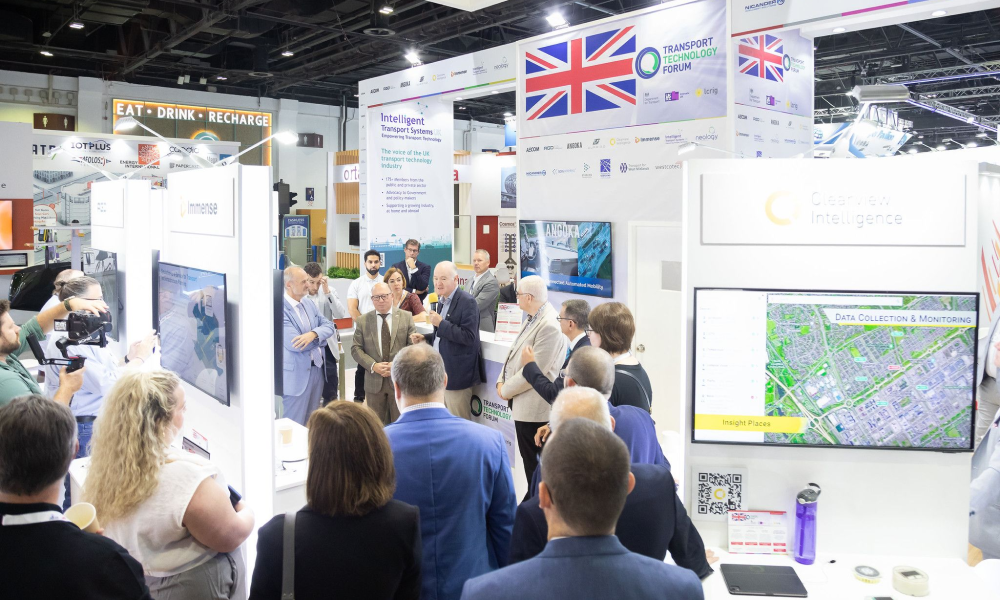
One of the busiest destinations for European visitors on day two was the UK & ERTICO – ITS European Pavilion. Positioned as a bridge between Gangneung 2026 and Birmingham 2027, the pavilion has quickly become an important meeting point for international delegates looking to understand both Europe's current innovation landscape and the ambitions for next year's World Congress in the United Kingdom.
The pavilion represents a collaborative effort involving ERTICO, Transport for West Midlands, the UK Government, the Department for Transport and LCRIG, supported by organisations from across the mobility ecosystem. Its presence sends a clear message that preparations for Birmingham 2027 are already well underway and that Europe intends to play a central role in many of the transport discussions emerging from Gangneung.
Throughout the day, visitors gathered to explore the work of a broad range of exhibitors representing connected and automated mobility, intelligent infrastructure, transport planning, network management and digital mobility services. UK organisations including Zenzic, AGD Systems, Podaris and Q-Free have been showcasing expertise that spans everything from traffic detection and network technologies through to planning tools and connected transport solutions. European participation has been equally strong, with ERTICO partners and organisations such as the CAR 2 CAR Communication Consortium, Ireland's Department for Transport, Aumovio and TamData contributing to the programme.
What makes the UK and ERTICO pavilion particularly effective is its balance between promotion and collaboration. Rather than simply acting as an exhibition stand, it has become a focal point for networking, technical discussion and relationship building. Conversations taking place there are helping connect organisations that share common challenges around road safety, traffic efficiency, digital infrastructure and transport data management. That collaborative atmosphere has been a recurring feature of the Congress so far and seems likely to strengthen as the week progresses.
Interest in Birmingham 2027 has also been steadily growing. Delegates visiting the pavilion have been given an opportunity to meet the teams responsible for delivering the next ITS World Congress in the EMEA region and to explore future opportunities for partnership, exhibition participation and knowledge exchange. With Gangneung providing an impressive showcase of global innovation, attention is already beginning to shift towards how the momentum generated in Korea can carry forward into the United Kingdom next year.
Beyond the exhibition halls, Gangneung itself continues to make a strong impression. The city combines the legacy of major international event hosting with its growing reputation as a living testbed for intelligent mobility technologies. That combination of technological ambition, cultural identity and coastal scenery has given the Congress a distinctive character that many delegates have commented upon throughout the opening days.
As day two drew to a close, one message had become increasingly clear. The intelligent transport sector is entering a period where success will be determined less by the ability to demonstrate innovation and more by the ability to deploy it at scale. Interoperability, operational resilience, data governance and effective partnership working are now every bit as important as technological breakthroughs themselves.
Gangneung's second day captured that reality perfectly. The discussion has matured. The questions have become more practical. Expectations have become more demanding. Yet the optimism remains intact. Judging by the conversations echoing through the convention centre and exhibition halls, the industry believes the necessary tools already exist to deliver safer, cleaner and more connected transport systems. The challenge now is turning possibility into performance, and day two demonstrated that much of the global ITS community is firmly focused on doing exactly that.
Click the buttons below to see more articles:
See all ArticlesIndustry InsightEventsITS Thought LeadershipITS Educational