
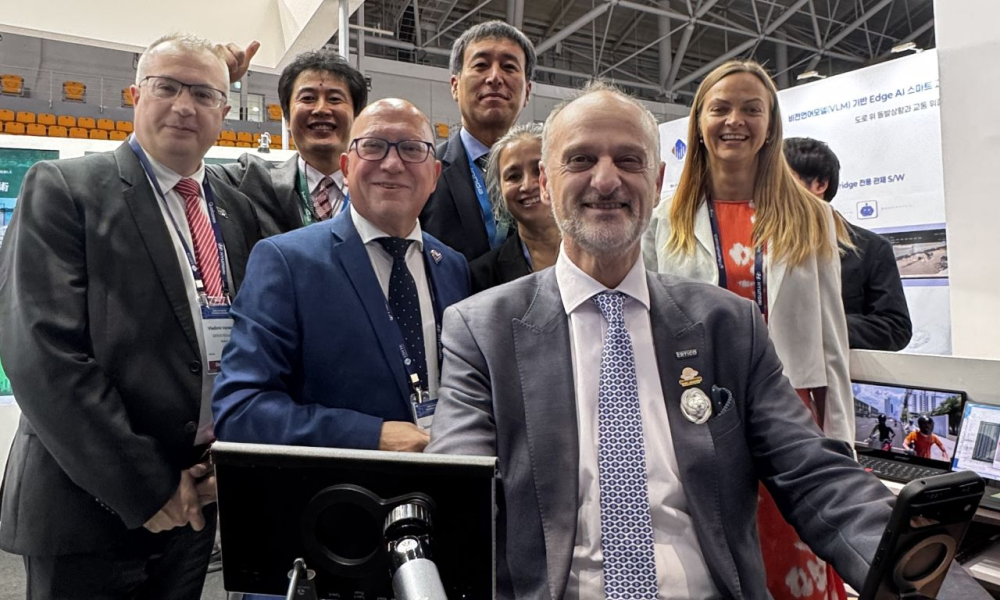
As delegates, industry pioneers, and transport ministers return home from Gangneung, South Korea, the mood across the global intelligent transport community is one of quiet determination. The 32nd ITS World Congress officially drew to a close this week, having convened over sixty thousand participants from more than ninety countries under the banner of Beyond Mobility, Connected World. While previous congresses often felt like showcases for isolated technology pilots or speculative concepts, Gangneung marked a definitive shift in maturity. The narrative has moved away from what connected technology might achieve in theory toward the practical, standardised, and interoperable architectures required to deploy these systems at scale.
Throughout the week, the South Korean coastal city served as a living laboratory and a global focal point for announcements surrounding Cooperative Intelligent Transport Systems, artificial intelligence in municipal management, and data-centric transit networks. Yet, amid the flurry of live demonstrations and technical sessions, the urgent necessity of global standards harmonisation was the central theme that dominated the proceedings.
For years, the transport technology sector has wrestled with the double-edged sword of rapid innovation. As cities deploy automated shuttle services, edge-computing monitoring tools, and cloud-based traffic management platforms, the risk of creating fragmented technological islands has grown acute. Proprietary communication protocols and isolated data architectures inevitably restrict the seamless movement of connected and automated mobility across municipal and national borders. A connected vehicle that functions flawlessly in one jurisdiction must not become digitally blind or mute upon crossing an administrative boundary.
Addressing this challenge head-on, international standardisation bodies, including ERTICO - ITS Europe and ITS Korea, utilised the final days in Gangneung to lead crucial expert seminars and ministerial roundtables. Their primary focus was bridging the gap between competing communication frameworks and creating genuinely open data spaces.
Vehicle-to-Everything communication, commonly known as V2X, formed a major pillar of these discussions. Low-latency messaging is essential for critical safety applications, such as emergency electronic brake lights or real-time hazard warnings. In Gangneung, the dialogue centred on establishing unified governance that aligns short-range radio protocols with cellular Vehicle-to-Network technologies. Rather than treating these modalities as mutually exclusive rivals, the emerging consensus emphasises a hybrid governance model where both can coexist securely, ensuring continuous and reliable coverage for all road users.
Simultaneously, discussions highlighted the critical role of open data ecosystems. Platforms such as the Traffic Light Information Exchange and various regional federated data networks were highlighted as models for the future. Delegates emphasised that roadside sensor data, traffic signal timings, and spatial mapping must adhere to manufacturer-agnostic architectures. Mandating open standards allows municipal authorities to retain sovereign ownership of their public right-of-way data while fostering a competitive environment where third-party developers can innovate responsibly. When public authorities control their underlying data assets, they can build flexible smart cities that avoid vendor lock-in and remain adaptable to future technological shifts.
Beyond the technicalities of data architecture and radio spectra, the closing sessions of the congress tackled the human dimension of modern transport infrastructure. Discussions focused heavily on transitioning driverless public transport out of restricted, closed-circuit test beds into dense urban environments. The consensus among international experts was clear, that autonomous deployment cannot succeed on engineering merit alone. Future systems must incorporate accessibility-compliant designs and intuitive human-machine interaction standards from the outset. Transport networks must serve every demographic safely, including older citizens, individuals with mobility impairments, and rural populations who are often overlooked in early technology rollouts.
The empirical evidence presented during the final days provided strong encouragement for municipal leaders considering similar investments. Delegates had the opportunity to review real-world performance metrics from Gangneung’s own city-wide smart infrastructure network. By integrating historical traffic patterns with real-time spatiotemporal artificial intelligence modelling, the city demonstrated measurable reductions in urban congestion and localized vehicle emissions. These findings demonstrate that intelligent transport systems are no longer merely experimental tools, they are vital instruments for reaching net-zero carbon targets and improving urban liveability.
As the curtain falls on Gangneung 2026, the international community is already looking ahead to the 33rd ITS World Congress, which will take place in Birmingham at the National Exhibition Centre. The handoff between host nations represents more than a geographic move from East Asia to Western Europe. It marks a critical window of time during which the agreements forged in South Korea must be translated into enforceable technical standards and cross-border initiatives. International pavilions in Gangneung were actively laying the groundwork for this transition, establishing bilateral working groups to align deployment schedules ahead of the UK gathering.
The legacy of the 32nd ITS World Congress will ultimately be measured by how effectively the sector dismantles regional technological silos. The technology required to build safe, efficient, and clean transport networks exists today. The primary obstacle remains structural, requiring political will, regulatory coordination, and a shared commitment to common standards.
If the collaborative spirit demonstrated in South Korea is any indication, the path toward fully interoperable mobility is clearer than it has ever been. Transport leaders now turn their focus to the road to Birmingham, tasked with building upon the solid foundation laid in Gangneung and turning the vision of a truly connected world into an everyday reality for travellers across the globe.
For readers keen to revisit the highlights and explore the stories behind the headlines, keep an eye out for the special ITS Edge Magazine 2026 Gangneung ITS World Congress Review Edition, which will be published next week at ITS Edge Magazine. Bringing together the key announcements, major industry themes, exclusive interviews, exhibition highlights and expert analysis from across the week, the review edition will provide a comprehensive record of what happened in Gangneung and what it could mean for the future direction of intelligent transport systems worldwide.
Click the buttons below to see more articles:
See all ArticlesIndustry InsightEventsITS Thought LeadershipITS Educational