
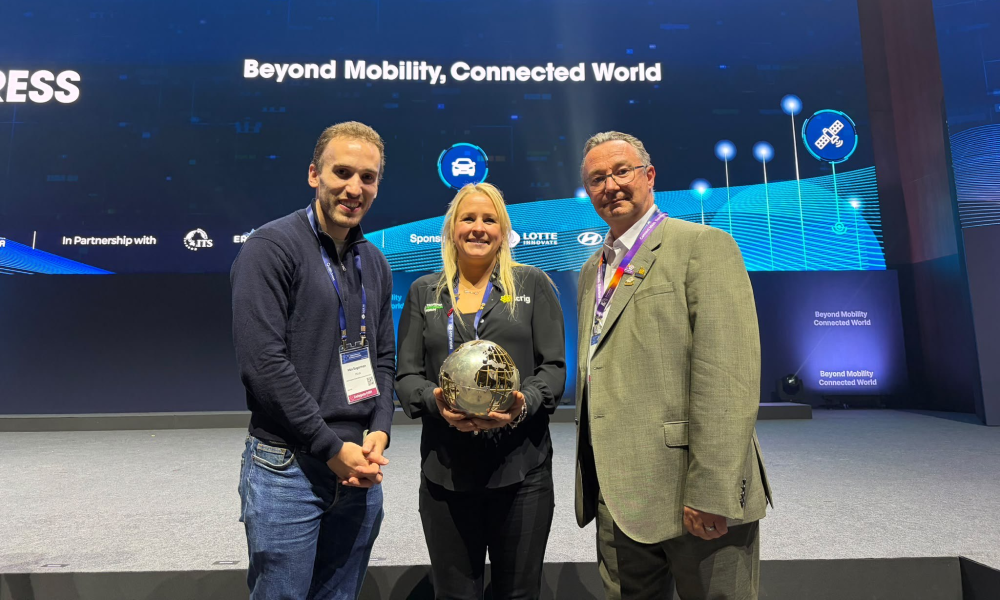
With the excitement of the 2026 ITS World Congress in Gangneung still fresh in the minds of delegates, the focus of the global intelligent transport community has already begun to shift towards the United Kingdom. In October 2027, Birmingham will host the 33rd ITS World Congress, bringing the event back to the UK for the first time since London welcomed the industry in 2006. As preparations gather pace, organisers have issued the Call for Contributors, inviting experts from across the world to help shape what promises to be one of the most significant mobility gatherings of the decade.
Taking place at the NEC Birmingham from 25 to 29 October 2027, the Congress will bring together policymakers, transport authorities, technology providers, researchers, innovators and practitioners from across the mobility ecosystem. Organisers expect around 15,000 participants from more than 100 countries, creating an unparalleled platform for knowledge exchange, debate and collaboration. The theme for the event Connect Ideas, Transform Transport reflects an ambition not simply to discuss future mobility, but to explore how innovation can be translated into practical deployment at scale.
For those considering participation, one date stands above all others. The submission deadline for both technical contributions and demonstrations is 22 January 2027, giving prospective contributors a relatively short window to prepare and submit proposals. Following submission, contributions will be reviewed by qualified experts, with final selections made by the International Programme Committee.
The announcement represents an important milestone in the journey towards Birmingham 2027 because it signals the beginning of the Congress programme itself. While exhibitions, demonstrations and networking often attract considerable attention, the technical programme remains the intellectual heart of the event. Successful contributions influence discussions throughout the Congress and frequently shape industry thinking well beyond the week itself.
This year's programme structure reflects many of the challenges and opportunities currently facing the transport sector. Organisers have identified four principal themes that will underpin both technical contributions and demonstration activities.
The first, Trustworthy and Resilient Systems, focuses on the foundations required for reliable modern transport networks. As digitalisation continues to transform mobility, issues such as cybersecurity, trusted data exchange, interoperability and infrastructure resilience have become central concerns for operators and authorities alike. Transport systems increasingly depend on connected technologies and real-time information, making reliability and trust every bit as important as innovation itself. Contributions within this theme are expected to explore approaches that strengthen confidence in intelligent transport systems while ensuring they remain robust in the face of emerging challenges.
Attention then turns towards the technologies that are likely to define the coming decade. The Next generation ITS theme will examine scalable solutions built around artificial intelligence, quantum technologies, robotics, intelligent vehicles and digital twins. These are no longer concepts confined to research laboratories. Increasingly they are finding their way into operational environments, helping to improve safety, efficiency and sustainability across transport networks. Contributors working at the forefront of applied innovation will find this category particularly relevant as the industry seeks to understand not only what is possible, but what is deployable.
A third programme stream, Connected and Integrated Services, reflects the growing recognition that mobility users expect seamless journeys rather than isolated transport modes. Topics include multimodal transport, connected vehicles, smart logistics, transport-energy integration and alternative fuels. As cities and regions continue to pursue integrated mobility strategies, lessons learned from practical deployments and operational programmes are likely to prove especially valuable. The theme provides an opportunity to examine how different transport systems can work together to create more efficient, sustainable and user-centred mobility experiences.
Completing the quartet is Deploying ITS at Scale, a theme that may resonate strongly with many practitioners. Industry conferences often excel at showcasing innovation, yet the real challenge frequently lies in implementation. This category explores infrastructure delivery, operations, governance, policy development, user-centred design and proven deployment methodologies. In many respects it addresses the critical question confronting transport organisations worldwide, of how successful pilots and demonstrations can be translated into long-term operational success?
Within those thematic areas, contributors can choose from four different submission formats, each designed to support a particular style of knowledge sharing.
Special Interest Sessions, commonly known as SIS, provide a forum for discussion-led exploration of emerging issues and strategic challenges. Rather than focusing on individual presentations, these sessions are intended to bring together multiple perspectives around important developments, policy directions and industry achievements. Organisers are actively encouraging proposals that stimulate debate and foster meaningful dialogue across sectors and disciplines.
For practitioners wishing to showcase operational experience, Technical Papers offer a particularly attractive route. These contributions focus on current deployments, pilot projects, technologies, operational lessons and institutional experience. The emphasis is firmly on practical application, providing delegates with evidence-based examples of what works in the real world. As intelligent transport solutions mature, this category is becoming increasingly important in helping organisations learn from one another's successes and challenges.
Researchers meanwhile can submit Research Papers, presenting original, peer-reviewed work supported by rigorous methodology and validated findings. This remains a cornerstone of the Congress programme, ensuring that emerging research continues to inform future policy, technology development and operational practice. Academic institutions, research organisations and innovation programmes all have an important role to play in advancing understanding across the ITS sector.
Perhaps the most interesting addition for Birmingham 2027 is the introduction of a dedicated Poster format. Designed to provide greater accessibility and flexibility, posters create opportunities for researchers, students, start-ups, innovators and project teams to present projects, pilots, early-stage findings and emerging concepts. The format recognises that valuable ideas often exist at different stages of maturity and that not every contribution needs to fit within a conventional conference presentation structure. This could prove particularly attractive for younger professionals and organisations making their first appearance at a global ITS event.
Alongside the technical programme, the Congress is also inviting applications for Live Demonstrations. Demonstrations have become one of the defining features of modern ITS events, providing delegates with opportunities to see technologies operating in real conditions rather than solely through presentations and discussion. Indoor and outdoor demonstration areas are expected to showcase a wide range of solutions, giving visitors direct exposure to emerging technologies and operational innovations.
For the UK intelligent transport community, hosting the Congress in Birmingham presents a rare opportunity to demonstrate leadership on a global stage. The West Midlands has established a strong reputation for innovation in connected and automated mobility, transport decarbonisation and digital infrastructure, while the wider UK continues to act as a testbed for many of the technologies shaping future transport systems. Birmingham 2027 will provide a showcase not only for new ideas, but for real-world deployment at scale.
With the submission deadline of 22 January 2027 approaching quickly, potential contributors should already be considering how their expertise, projects and experience might contribute to the conversation. Whether through research, practical deployment lessons, strategic discussion or live demonstration, Birmingham 2027 offers an opportunity to influence global thinking at a pivotal moment for the transport sector. The road to the Congress has officially begun, and the call has gone out for the industry to help write the next chapter.
Find out more at: https://www.2027.itsworldcongress.com/call-for-contributions
Click the buttons below to see more articles:
See all ArticlesIndustry InsightEventsITS Thought LeadershipITS Educational