150x150.png)
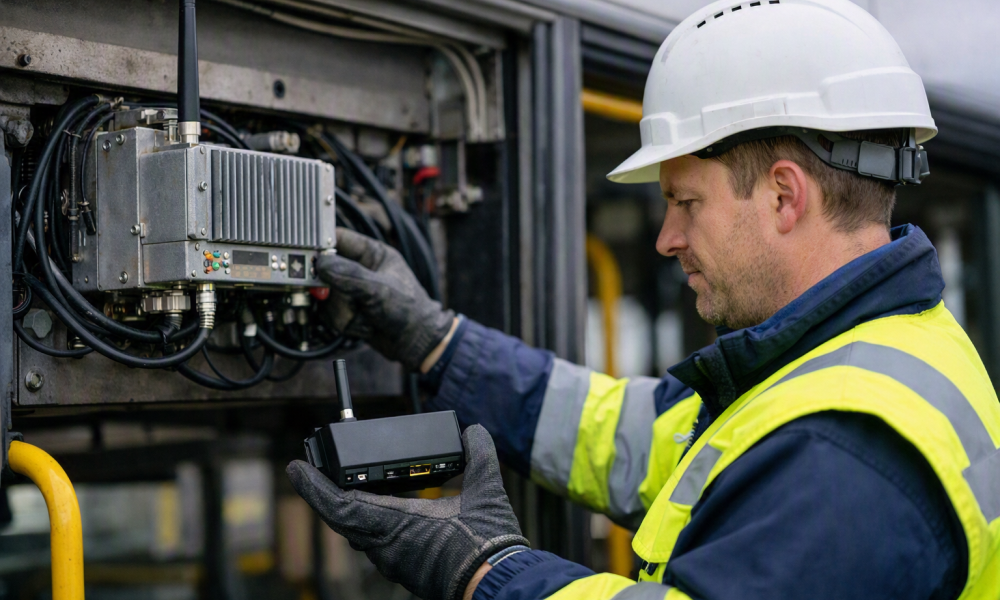
The promise of 5G arrived with a flourish of confident headlines, glossy demonstrations and breathless claims about a new era of limitless connectivity. Cities were told it would unlock autonomous mobility, real-time environmental sensing, remote healthcare, seamless public transport integration and a step change in citizen services. The narrative around 6G has already begun to follow the same arc, with talk of holographic communication, tactile internet experiences and networks that respond almost instinctively to human behaviour. Yet beneath the marketing, a quieter and more grounded reality is taking shape. The story is no longer about what might be possible, but what is actually working, what is struggling to gain traction, and what some cities are beginning to abandon altogether.
The first truth is that 5G has delivered genuine progress in specific, well-defined areas. Private networks for ports, logistics hubs and industrial campuses have shown real value, particularly where controlled environments allow predictable deployment and clear business cases. High-density venues such as stadiums have benefited from improved capacity, enabling richer digital services without the familiar congestion that used to cripple 4G during major events. Emergency services have begun to explore mission-critical applications, although these remain in early stages. There is also steady movement in connected vehicle trials, where low-latency communication supports safety messages and cooperative manoeuvres. These successes are tangible, measurable and quietly impressive.
The second truth is that many of the grander promises have not materialised at city scale. Urban authorities were encouraged to expect ubiquitous coverage, transformational public services and a wave of innovation that would sweep through transport, health, education and planning. Instead, they have encountered patchy deployment, inconsistent performance and a complex web of commercial arrangements that make city-wide coordination difficult. The economics of dense small-cell networks have proven challenging, particularly in historic or constrained streetscapes where installation is neither simple nor cheap. Some councils have found themselves hosting infrastructure that delivers little direct benefit to their own operations, while bearing the visual and maintenance burden of additional street furniture.
A number of cities have begun to step back from early ambitions. Plans for pervasive sensor networks using 5G have been quietly shelved in favour of more modest, hybrid approaches that blend fibre, Wi-Fi, LoRaWAN and existing cellular networks. Trials of 5G-enabled augmented reality for tourism or cultural experiences have been scaled down after limited uptake. Transport authorities have paused or re-scoped projects that relied on assumptions about latency and reliability that proved difficult to achieve outside controlled testbeds. None of this represents failure; it reflects a maturing understanding of what the technology can realistically deliver in the near term.
The emerging conversation around 6G adds another layer of complexity. Research communities are already exploring concepts such as integrated sensing and communication, AI-native network management and sub-terahertz spectrum. These ideas are exciting, yet they risk repeating the cycle of over-promising before the fundamentals of deployment, cost and governance are understood. Cities that have lived through the 5G hype are approaching 6G with a more sceptical eye. They want clarity on practical use cases, realistic timelines and the role of public authorities in shaping the ecosystem. They also want assurance that lessons from 5G will be carried forward, particularly around transparency, collaboration and long-term value.
The shift away from older networks adds further pressure. The retirement of 3G is already well underway, and 4G sunsets are being planned across multiple markets. These transitions carry significant implications for transport, public safety, environmental monitoring and social inclusion. Many roadside assets, from traffic signals to parking meters, still rely on 3G or 4G modules. Upgrading them is not trivial; it requires funding, procurement, installation and testing across thousands of dispersed locations. Some authorities have discovered devices they did not realise were connected, or legacy systems that cannot be easily adapted. The risk is that critical functions could be disrupted if upgrades are not completed in time.
The social dimension is equally important. A surprising number of vulnerable citizens still depend on older mobile networks for basic connectivity, either through legacy handsets or low-cost plans that have not yet migrated to newer technologies. The switch-off of 3G and, eventually, 4G could leave them isolated unless support programmes are in place. Charities and local authorities are beginning to raise concerns about digital exclusion, particularly in rural areas where coverage gaps persist. The narrative of progress must be balanced with a commitment to ensure no one is left behind.
Transport networks face their own challenges. Connected buses, taxis and maintenance fleets often use 3G or 4G telematics units that were installed years ago and have operated reliably ever since. Replacing them at scale is expensive and time-consuming. Some operators are discovering that newer modules require different power profiles or antenna configurations, forcing additional modifications. The switch-off timeline is creating pressure to act quickly, yet rushed upgrades risk introducing new points of failure. A measured, well-planned approach is essential.
The broader implication is that cities must now navigate a complex landscape of overlapping technologies, each with its own strengths, limitations and lifecycle pressures. The future will not be defined by a single network generation. It will be shaped by a blend of fibre backbones, resilient Wi-Fi, evolving cellular networks, satellite connectivity and low-power wide-area systems. The most successful cities will be those that adopt a pragmatic, layered strategy rather than chasing the next headline. They will focus on interoperability, long-term maintenance and the ability to adapt as technologies mature.
A reality check does not diminish the potential of 5G or 6G. It simply reframes the conversation. The value lies not in sweeping transformation, but in targeted applications where the technology genuinely solves problems. Cities are learning to ask sharper questions:
These questions lead to more grounded decisions and more sustainable innovation.
The coming years will see continued evolution, with 5G networks becoming more capable and 6G research progressing steadily. Yet the tone will be different. The sector is moving away from hype and towards evidence. Cities are becoming more discerning customers, and suppliers are responding with clearer, more realistic propositions. This shift is healthy. It encourages collaboration, reduces disappointment and builds trust.
The real opportunity lies in aligning connectivity with genuine urban priorities. If networks support safer streets, cleaner air, efficient transport, accessible services and resilient infrastructure, they will earn their place in the civic landscape. If they remain abstract promises, they will struggle to justify their cost and complexity. The reality check is not a setback; it is a moment of clarity. It allows cities to focus on what matters, invest wisely and prepare for a future where connectivity is an enabler rather than a headline.
The story of 5G and 6G is still being written. It will be shaped not by marketing slogans, but by the quiet, steady work of authorities, engineers, planners and communities. Progress will come through practical deployment, honest evaluation and a willingness to adapt. Cities that embrace this approach will find themselves well placed to navigate the coming decade of digital transformation.
Click the buttons below to see more articles:
See all ArticlesIndustry InsightEventsITS Thought LeadershipITS Educational