
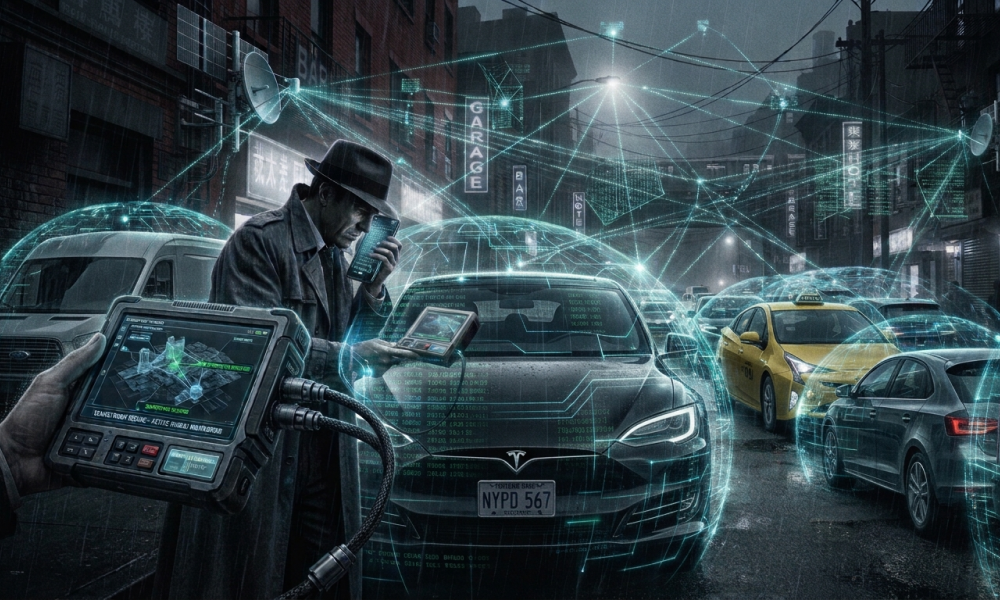
The automotive industry has spent much of the past decade embracing connectivity as the foundation of future mobility. Vehicles have evolved from largely self-contained machines into sophisticated computing platforms, constantly exchanging information with infrastructure, cloud services, fleet operators and other road users. This transformation has unlocked extraordinary opportunities for safer roads, smarter traffic management and more efficient transport networks. Yet every new connection introduces another potential point of vulnerability, creating a challenge that can no longer be treated as a niche technical concern.
That reality will be firmly in the spotlight at Automotive Cyber Security Europe, taking place in Munich, Germany, on 20 and 21 October 2026. Bringing together vehicle manufacturers, technology providers, cybersecurity specialists, regulators and transport experts, the event arrives at a pivotal moment for Europe's automotive sector. Connected vehicles are rapidly becoming mainstream, vehicle-to-everything (V2X) communications are moving from pilot projects towards wider deployment, and a growing body of legislation is placing cybersecurity squarely at the centre of vehicle development and operation.
Cybersecurity has become one of the defining engineering challenges of modern mobility. Every connected vehicle contains dozens of electronic control units, millions of lines of software code and multiple interfaces linking it to external networks. Over-the-air software updates, remote diagnostics, navigation services and connected safety applications deliver enormous benefits, but each connection expands the attack surface that malicious actors may target.
For vehicle manufacturers, protecting those systems is no longer simply a matter of safeguarding intellectual property or preventing inconvenience. A successful cyberattack has the potential to disrupt safety-critical functions, compromise personal data, damage public trust and create significant financial and reputational consequences. Regulators have recognised these risks, leading to a growing framework of cybersecurity obligations that manufacturers must address throughout the vehicle lifecycle.
One of the most significant themes expected to dominate discussions in Munich is the practical implementation of Europe's Cyber Resilience Act. While the legislation applies across a broad spectrum of digital products, its implications for automotive technologies are particularly significant. Manufacturers must increasingly demonstrate that cybersecurity has been embedded into products by design, supported throughout their operational life and continuously monitored against emerging threats.
The shift represents a fundamental change in thinking. Historically, compliance was often viewed as a milestone achieved during development. Today, cybersecurity is becoming a continuous responsibility extending from design and production through to operation, maintenance and eventual decommissioning. Vehicle manufacturers are discovering that cybersecurity governance requires the same level of rigour that has long been applied to functional safety.
This challenge extends far beyond the vehicle itself. Connected mobility depends on a complex ecosystem of suppliers, software providers, cloud platforms and infrastructure operators. A weakness anywhere in that chain can create risks across the wider system. As a result, cybersecurity is increasingly being approached as a shared responsibility rather than an isolated technical discipline.
That perspective becomes even more important when considering the growth of V2X technologies. Connected vehicles rely on trusted communications with roadside infrastructure, traffic signal controllers, traffic management systems and neighbouring vehicles. These exchanges enable applications ranging from collision warnings and emergency vehicle prioritisation to intelligent speed advice and cooperative traffic management.
The promise of V2X is compelling. Transport authorities and mobility providers see enormous potential for reducing congestion, improving safety and supporting future automated driving systems. Realising those benefits, however, depends on confidence that the underlying communications remain secure, authentic and resilient.
This creates a particularly interesting overlap between the automotive and ITS sectors. Historically, vehicle cybersecurity and infrastructure cybersecurity developed along relatively separate paths. Increasingly, those worlds are converging. The connected vehicle is becoming an integral component within a broader digital transport ecosystem, meaning that collaboration between vehicle manufacturers, road authorities, infrastructure operators and technology suppliers is essential.
Munich provides an ideal setting for these discussions. Germany remains one of the world's leading automotive innovation centres, combining established vehicle manufacturing expertise with significant investment in digital mobility technologies. The city's reputation as a hub for automotive research, engineering and technological development makes it a natural venue for conversations that will help shape the next phase of connected transport.
Artificial intelligence is also expected to feature prominently throughout the event. Security teams are using AI-powered tools to identify threats, detect unusual network activity and respond to incidents more rapidly. At the same time, cybercriminals are beginning to exploit similar technologies to automate attacks and develop increasingly sophisticated methods of intrusion.
This evolving landscape means that defensive strategies cannot remain static. Organisations must continuously adapt to new threats while maintaining compliance with rapidly changing regulations. Cybersecurity professionals are increasingly focused on resilience rather than absolute protection, recognising that the ability to detect, respond and recover quickly has become just as important as preventing attacks in the first place.
Another important area of discussion is likely to centre on software-defined vehicles. The concept has become one of the automotive industry's most significant trends, with manufacturers relying increasingly on software to deliver new functionality, customer experiences and operational improvements. Software-defined architectures support innovation and flexibility, yet they also introduce fresh cybersecurity considerations.
Managing software vulnerabilities, maintaining secure update mechanisms and protecting vehicle platforms throughout lengthy operational lifecycles are becoming major strategic priorities. Unlike consumer electronics, vehicles may remain in service for well over a decade, requiring long-term approaches to cybersecurity management. Ensuring that vehicles remain secure throughout that period represents a substantial challenge for manufacturers and suppliers alike.
This is where events such as Automotive Cyber Security Europe provide significant value. Regulations can establish requirements and standards can define best practice, but industry collaboration remains essential for translating those principles into practical implementation. Conferences offer a forum where organisations can share experiences, discuss emerging threats and explore approaches that have proven effective in real-world deployments.
Participants attending the Munich event will be seeking insight into more than technical solutions. Questions surrounding organisational culture, supply chain governance, regulatory compliance and risk management are becoming increasingly important. Cybersecurity is now a boardroom issue as much as an engineering challenge, requiring leadership engagement alongside technical expertise.
Ultimately, the discussions taking place at Automotive Cyber Security Europe reflect a broader transformation occurring across the mobility sector. The future of transport depends upon digital connectivity, yet the benefits of that connectivity can only be realised if users, operators and regulators trust the systems that support it.
Building that trust demands secure vehicles, resilient infrastructure and effective collaboration across the entire mobility ecosystem. As connected and automated transport continues to advance, cybersecurity will become one of the critical enablers of progress rather than simply a protective measure. The conversations held in Munich this October will therefore extend well beyond compliance and threat mitigation. They will help define how Europe's automotive and transport industries secure the foundations of an increasingly connected future.
Click the buttons below to see more articles:
See all ArticlesIndustry InsightEventsITS Thought LeadershipITS Educational