150x150.png)
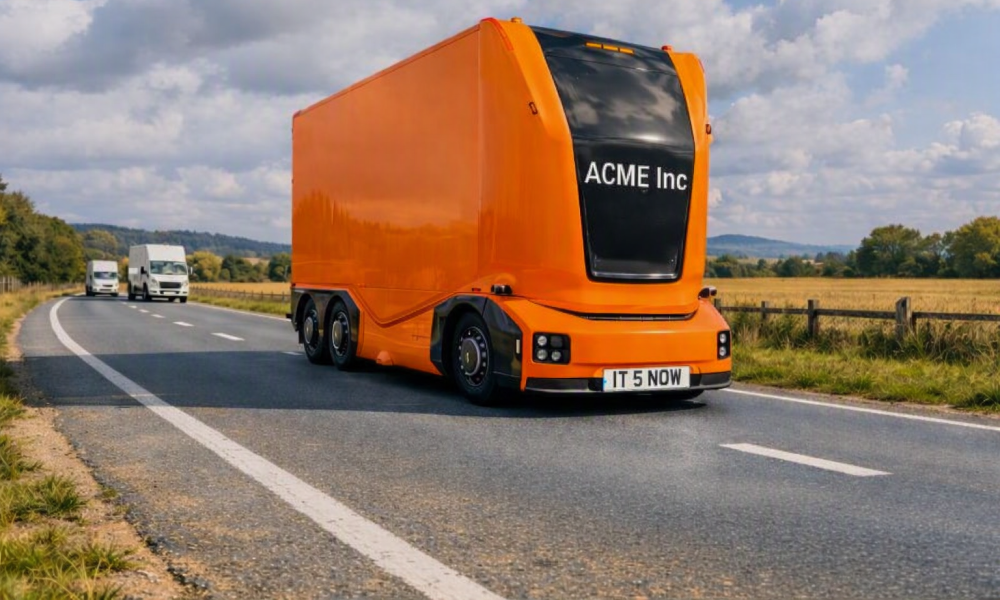
Autonomous freight corridors are beginning to move from speculative concept to practical ambition, yet the path to real-world deployment remains shaped by a complex blend of policy choices, infrastructure readiness, telematics maturity and commercial incentives. The idea is simple enough: create defined motorway and trunk-road routes where self-driving heavy goods vehicles can operate with confidence, supported by connected infrastructure, harmonised regulation and a business model that rewards early adoption. The execution is far more intricate, demanding coordination across government, industry and technology providers in a way that freight has rarely experienced.
The policy landscape is the first decisive factor. Governments must establish a regulatory framework that allows automated HGVs to operate at scale, not just in controlled pilots. This means clear rules on operational design domains, liability, data sharing and cross-border interoperability. Freight corridors often span regions or nations, so consistency matters. Operators need assurance that an automated vehicle travelling from Rotterdam to Stuttgart or from Dover to Birmingham will not face a patchwork of conflicting requirements. Policy must also define how human oversight fits into the model. Remote supervision, fleet-level monitoring and intervention protocols all require legal clarity. Without this, investment stalls and manufacturers hesitate to commit to production volumes.
Infrastructure readiness sits alongside policy as a foundational requirement. Autonomous freight corridors demand roads that are predictable, well maintained and equipped with digital layers that support automated operation. High-quality lane markings, reliable signage, stable geometry and consistent lighting conditions form the physical baseline. The digital layer adds connected roadside units, high-accuracy positioning support, environmental sensors and resilient communications. Motorways already offer structured environments, but the level of precision required for self-driving HGVs raises the bar. A corridor must behave consistently across its entire length, not simply in isolated sections. This creates a new form of infrastructure stewardship, where digital condition becomes as important as physical condition. Heavy engineering has always carried a certain allure in the transport sector, promising solidity, permanence and a sense of national capability. Yet autonomous freight corridors expose the risks of relying too heavily on traditional engineering responses when the underlying challenge is increasingly digital. Large capital projects can lock network operators into long depreciation cycles, leaving them with physical assets that struggle to keep pace with rapid advances in automation, connectivity and telematics. A corridor built around today’s sensor specifications or communications protocols may find itself mismatched to tomorrow’s vehicle capabilities. Operators face the danger of investing in infrastructure that becomes obsolete before it has delivered its full value, particularly if standards evolve or manufacturers shift direction. The lesson is clear enough: resilience in an autonomous freight corridor comes from adaptability, not mass. Digital layers can be upgraded, reconfigured and scaled with relative ease, while heavy engineering fixes the network to a moment in time. The challenge for operators is to strike a balance between durable physical improvements and flexible digital systems, ensuring that investment supports long-term evolution rather than constraining it.
Telematics provide the nervous system of an autonomous freight corridor. Vehicles must communicate with infrastructure, fleet management centres and other road users in real time. This requires multi-channel connectivity, combining cellular networks, satellite links and short-range communications to ensure continuity. The corridor must support high-integrity data flows for localisation, hazard detection, traffic management and cooperative manoeuvres. Platooning, automated lane changes and coordinated merging all rely on telematics that behave with absolute reliability. The corridor becomes a shared information environment where every participant contributes to situational awareness. This raises questions about data governance, cybersecurity and commercial access. Freight operators will not share sensitive operational data without trust, yet the corridor cannot function without a degree of openness.
Commercial stimulus is the final piece of the puzzle. Freight operators adopt new technology when it improves efficiency, reduces cost or enhances reliability. Autonomous corridors promise all three, but the benefits must be tangible. Reduced fuel consumption through platooning, lower insurance premiums due to improved safety, extended operating hours and more predictable journey times all create value. However, early deployment carries risk. Operators may need financial incentives, tax relief or access to dedicated infrastructure to justify the transition. Manufacturers require confidence that demand will follow investment. Governments may need to support initial deployments through public-private partnerships, ensuring that the corridor reaches critical mass. Once established, the commercial case strengthens naturally, but the early stages demand careful nurturing.
The interaction between these elements shapes the character of an autonomous freight corridor. Policy defines what is permissible. Infrastructure determines what is possible. Telematics enable what is practical. Commercial stimulus drives what is profitable. When these align, the corridor becomes a living system that supports automated freight movements with calm reliability. When they diverge, progress slows and the corridor risks becoming a stalled pilot rather than a transformative asset.
The operational model of a self-driving HGV route introduces new dynamics for traffic management. Automated vehicles behave consistently, maintain stable headways and respond instantly to changes in conditions. This creates smoother flows and reduces the variability that often disrupts freight movements. Traffic management centres can coordinate automated convoys, allocate lane priority and optimise throughput during peak logistics periods. The corridor becomes a managed environment where freight receives structured support rather than competing with general traffic for space and predictability. This raises questions about how mixed traffic will behave. Human drivers may need guidance on interacting with automated HGVs, particularly during merging or overtaking. Public communication becomes part of the corridor’s operational fabric.
Safety is central to the corridor’s value proposition. Automated HGVs remove many of the risks associated with fatigue, distraction and inconsistent behaviour. They respond to hazards with precision and maintain stable trajectories even in challenging conditions. The corridor amplifies these benefits by providing a predictable environment. Roadside sensors can detect debris, adverse weather or erratic vehicles and relay warnings instantly. Fleet management centres can monitor every vehicle’s status and intervene when necessary. The result is a safety ecosystem that supports both automated and human-driven vehicles. This strengthens public confidence and helps regulators justify the corridor’s existence.
Environmental benefits also emerge. Platooning reduces aerodynamic drag and lowers fuel consumption. Automated driving smooths acceleration and braking, reducing emissions. Electric HGVs gain predictable routes that support charging strategies. Logistics operators can plan movements more efficiently, reducing empty running and improving asset utilisation. The corridor becomes a tool for decarbonisation, supporting national climate goals while improving freight performance.
The long-term vision extends beyond isolated corridors. Once proven, autonomous freight routes could form a network across Europe and the UK, linking ports, logistics hubs and major industrial regions. This would reshape supply chains, enabling goods to move with greater reliability and lower cost. It would also influence infrastructure investment, encouraging upgrades that support digital operation. Over time, the network could integrate with automated urban logistics, creating seamless end-to-end journeys.
Autonomous freight corridors represent a significant shift in how nations think about logistics. They require collaboration, investment and a willingness to rethink traditional assumptions about road transport. The rewards are substantial: safer journeys, more efficient operations, lower emissions and a more resilient supply chain. The challenge lies in aligning policy, infrastructure, telematics and commercial incentives in a way that supports sustained deployment. Freight has always been the backbone of mobility. Autonomous corridors offer a future where that backbone becomes stronger, smarter and more reliable, shaping a new era of connected logistics.
Click the buttons below to see more articles:
See all ArticlesIndustry InsightEventsITS Thought LeadershipITS Educational