
Today marks the conclusion of the first operational block of the C-Roads Italy Cross-Border Tests, a significant milestone within the wider European SCALE project. Conducted between 16 and 20 November 2026, the programme has brought together infrastructure operators, vehicle manufacturers, technology suppliers and research organisations to test how Cooperative Intelligent Transport Systems (C-ITS) can function consistently across different road environments and organisational boundaries. A second round of testing is scheduled to follow immediately from 23 to 27 November, building on the lessons learned during this initial phase.
While demonstration projects often attract attention for their technical sophistication, the real importance of these trials lies in a far more practical objective. European road networks do not stop at national borders, and neither should the digital services that increasingly support drivers, freight operators and public authorities. The challenge facing the ITS sector is not simply developing connected vehicle technologies, but ensuring that systems supplied by different manufacturers, deployed by different operators and operating under different governance arrangements can communicate reliably with one another. That is precisely the problem the C-Roads initiative has been designed to address.
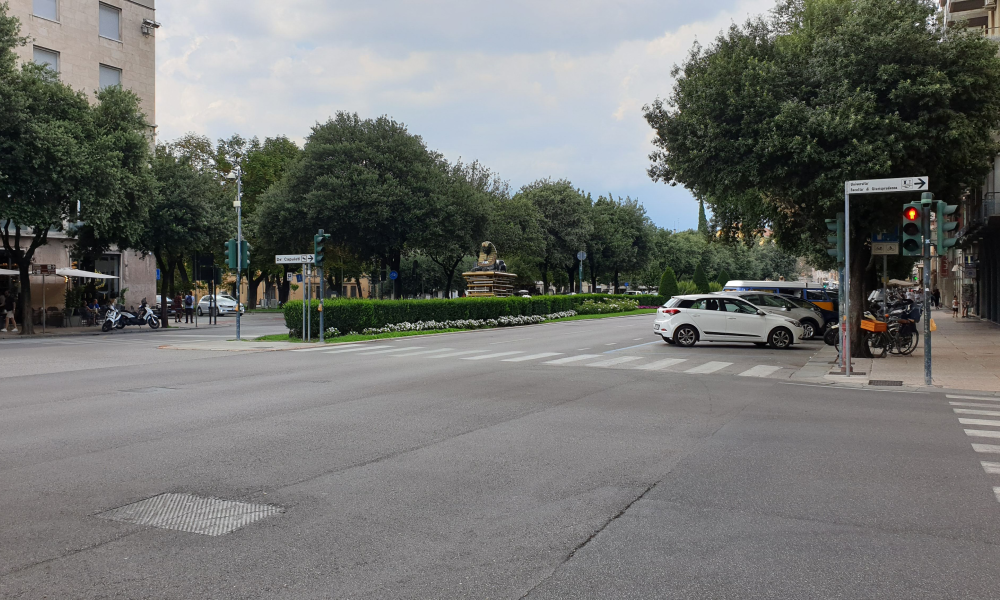
The latest Italian tests have taken place across a mix of motorway and urban environments, reflecting the complexity of real-world mobility. Motorway sections along the strategically important A4 corridor between Brescia, Verona, Vicenza and Padua have been used alongside the A22 Brenner route, one of Europe's most important north-south freight corridors. Urban testing has meanwhile been concentrated in Verona, allowing participants to assess how cooperative services perform in more dynamic traffic conditions where signalised junctions, public transport movements and emergency vehicle operations introduce additional complexity.
Such a combination of environments highlights a growing reality within the ITS sector. Connected mobility can no longer be viewed solely as a motorway technology or an urban technology. Road users increasingly expect seamless information regardless of where they are travelling, whether navigating a busy city centre, crossing regional boundaries or undertaking long-distance freight movements across Europe. Delivering that seamless experience requires interoperability at a scale that extends beyond individual cities, road operators or national programmes.
Among the most important services under evaluation during the motorway trials are Hazard and Traffic Event Notifications, Mobile Roadworks Warnings and In-Vehicle Signage. Although these technologies are now familiar to many ITS professionals, large-scale validation remains essential. A driver receiving an alert about a hazard ahead must have confidence that the information is accurate, timely and presented consistently regardless of vehicle make, communications platform or road authority responsible for the infrastructure.
The significance of these services should not be underestimated. Road operators have traditionally relied upon roadside signs, variable message signs and radio broadcasts to communicate with motorists. Connected vehicle technologies introduce the possibility of delivering contextual information directly into the vehicle itself, reducing reaction times and helping drivers make more informed decisions. Hazard warnings can alert motorists to incidents beyond their line of sight, while roadworks notifications can encourage earlier lane changes and smoother merging behaviour, reducing the likelihood of secondary incidents.
Testing on the A22 has also incorporated Variable Message Sign alignment, Toll Station Notifications and Points of Interest information relating to service areas. These may initially appear less dramatic than safety-critical warnings, yet they demonstrate how cooperative mobility is evolving into a broader ecosystem of connected services. Future journeys are likely to involve an increasingly integrated flow of information, combining safety alerts, operational updates and traveller information within a single digital environment.
From an ITS deployment perspective, one of the most valuable aspects of the Italian programme is its focus on multi-vendor interoperability. Historically, transport technology deployments have often been delivered within relatively self-contained ecosystems. As connected mobility expands, that model becomes increasingly unsustainable. Vehicles, roadside infrastructure and traffic management centres must interact regardless of supplier, requiring common standards, harmonised message sets and rigorous validation processes.
This requirement becomes even more important when considering the broader European ambition for connected and automated mobility. Freight vehicles travelling international routes may encounter dozens of operators and multiple technology platforms during a single journey. Any inconsistency in communications standards risks undermining user confidence and limiting the benefits these technologies are intended to provide. Initiatives such as C-Roads therefore play a crucial role in transforming technical specifications into demonstrated operational capability.
Within Verona's urban environment, attention has centred on Traffic Light Information and Green Light Optimal Speed Advisory services, commonly known as GLOSA, alongside emergency vehicle notification functions. These applications illustrate how cooperative mobility can deliver benefits extending beyond traditional road safety objectives.
GLOSA services provide drivers with information about upcoming signal phases and recommended approach speeds. In theory, the concept is simple. In practice, its implications are far-reaching. By helping drivers approach junctions more smoothly, GLOSA has the potential to reduce unnecessary stopping, improve traffic flow, lower fuel consumption and enhance the overall driving experience. In increasingly congested urban environments, even relatively modest efficiency gains can generate significant cumulative benefits.
Emergency vehicle notification services represent another important area of development. Rapidly identifying and responding to approaching emergency vehicles remains a challenge in dense traffic environments. Cooperative communication enables vehicles and infrastructure systems to provide advance warning, creating opportunities for safer and more efficient route clearance. As cities continue to explore intelligent traffic management and connected vehicle applications, emergency services are likely to become major beneficiaries of cooperative mobility platforms.
Beyond the technical achievements themselves, the Italian trials demonstrate the increasing maturity of the European C-ITS landscape. The focus of discussion has gradually shifted away from whether connected vehicle technologies are feasible towards questions of deployment readiness, operational scalability and cross-border consistency. That transition reflects years of investment in standards development, stakeholder collaboration and real-world testing.
The first week of testing may have concluded today, but the broader significance of the programme extends well beyond a single operational window. Results generated during these trials will help inform future deployments, support harmonisation efforts and provide valuable evidence for manufacturers, operators and policymakers seeking to accelerate cooperative mobility adoption across Europe.
With the second test block about to begin, attention will turn towards further validation activities and the continued refinement of services under real traffic conditions. For the ITS community, however, the message is already clear. Connected mobility is progressing from isolated pilots towards an interoperable European ecosystem where vehicles, infrastructure and traffic management systems communicate seamlessly across cities, regions and national borders. The roads of tomorrow will depend as much on digital connectivity as physical infrastructure, and programmes such as the C-Roads Italy Cross-Border Tests are helping to ensure that foundation is built on robust, proven and interoperable technology.
Click the buttons below to see more articles:
See all ArticlesIndustry InsightEventsITS Thought LeadershipITS Educational