150x150.png)
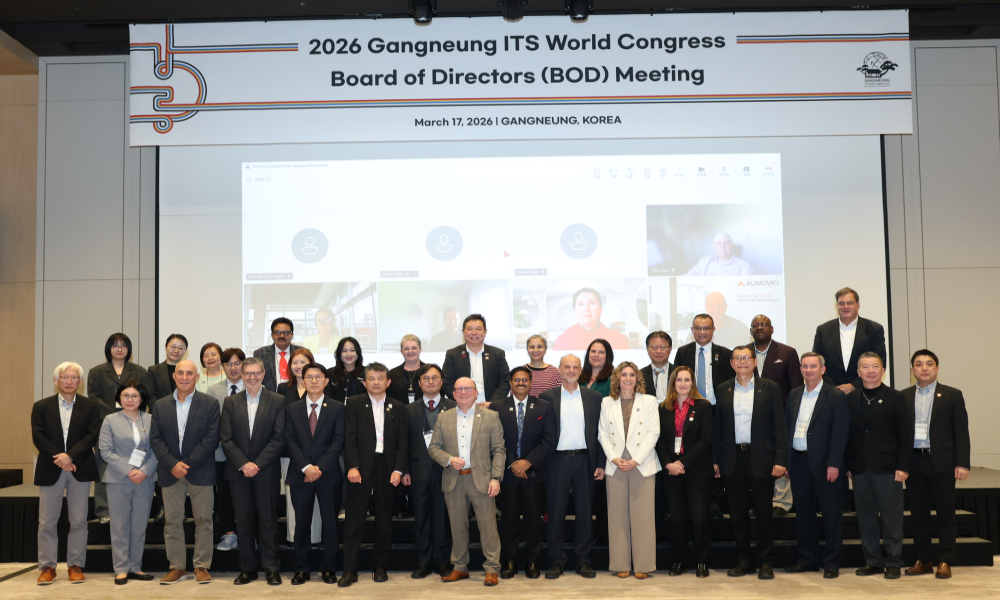
The coastal city of Gangneung in South Korea (renowned for its "pine city" charm and Olympic legacy), has cleared its most significant hurdle yet on the road to hosting the world’s premier transport technology event. From 17–19 March 2026, the city played host to a high-level delegation of approximately 50 members from the Intelligent Transport Systems (ITS) Board of Directors (BOD) and the International Program Committee (IPC).
This intensive three-day summit of site inspections, technical reviews and strategic planning has officially confirmed that Gangneung is not just ready but positioned to deliver a "world-class" ITS World Congress 2026. With the global transport community looking toward South Korea’s innovation-led infrastructure, the meetings served as the final operational blueprint for an event expected to redefine smart mobility in the Asia-Pacific region.
A critical component of the visit was the physical inspection of the "Gangneung Olympic Legacy" infrastructure. Delegates conducted exhaustive on-site reviews of the Gangneung Convention Centre, the sprawling Olympic Park and the Gangneung City Information Centre.
The consensus among the BOD members was one of quiet confidence. By repurposing Olympic venues for the Congress, Gangneung is demonstrating a masterclass in urban sustainability. The Seongyojang, a historic traditional estate selected as the VIP dinner venue, particularly impressed the international cohort, offering a cultural counterpoint to the high-tech focus of the sessions.
"The facilities are in peak condition", noted one delegate during the tour, "the integration of the City Information Centre, a hub of real-time data orchestration, provides the perfect live-demo environment for the technologies we will be discussing in the halls."
During the Asia-Pacific (AP) BOD Meeting, the focus turned toward the long-term health of the region's transport sector. While the immediate excitement surrounded the progress of the upcoming Auckland Congress, the board took a significant step forward by officially selecting Singapore as the host for the 2028 ITS Asia-Pacific Congress.
Beyond host selections, two major policy shifts were discussed:
MOU Revisions: Proposed updates to the Memorandum of Understanding on host city selection were debated to ensure a more transparent and equitable bidding process for future AP events.
The Mentorship Initiative: Recognising a looming skills gap in the sector, the BOD introduced a new mentorship program aimed at fostering young ITS talent. This initiative seeks to pair industry veterans with emerging engineers from across the Asia-Pacific to ensure the "brain trust" of the industry continues to grow.
While the AP board looked at the region, the World Congress (WC) BOD took the "macro" view. Reviewing reports from previous hosts like Atlanta and looking ahead to Gangneung, the board provided granular feedback on the 2026 preparations.
While the technical readiness was praised, the BOD provided constructive "finishing touches" regarding:
Transport Accessibility: Ensuring seamless transit for the thousands of international delegates expected to arrive from Incheon and Seoul.
Venue Connectivity: Enhancing high-speed digital infrastructure between the various hubs in Olympic Park to support high-bandwidth live demonstrations.
Ministerial Engagement: Coordinating high-level governmental meetings to ensure the Congress leads to actual policy shifts in international transport law.
Perhaps the most rigorous work took place within the International Program Committee (IPC). With 31 members representing three global regions, the committee tackled the massive task of curating the Congress’s intellectual output.
The sheer volume of interest in Gangneung 2026 is evident in the numbers:
501 Technical Papers submitted for peer review.
143 Special Session proposals received.
100 Special Sessions and 83 Topic-Based Sessions currently being finalised.
The IPC is now entering a critical "April–May" window, during which peer reviews will be completed and the final speaker roster will be confirmed. The program is expected to lean heavily into the themes of autonomous safety, AI ethics in transit and the decarbonisation of the global logistics chain.
| Committee | Key Outcome | Impact |
|---|---|---|
| AP BOD | Singapore 2028 Selection | Long-term stability for the regional event calendar. |
| Technical Team | Venue Readiness Confirmed | High confidence in the "Olympic Legacy" infrastructure. |
| WC BOD | Connectivity Feedback | Accelerated improvements to delegate transit and digital infrastructure. |
| IPC | 640+ Total Submissions | A diverse, high-calibre technical program spanning three regions. |
The conclusion of the March meetings in Gangneung marks the end of the "planning" phase and the beginning of the "execution" phase. With no major issues identified and a surplus of high-quality technical submissions, the momentum behind the 2026 ITS World Congress is undeniable.
As the IPC moves toward finalising speakers and the city of Gangneung polishes its smart-city interfaces, the message to the global ITS community is clear: South Korea is ready to host a Congress that is as efficient as its highways and as innovative as its technology.
Click the buttons below to see more articles:
See all ArticlesIndustry InsightEventsITS Thought LeadershipITS Educational