150x150.png)
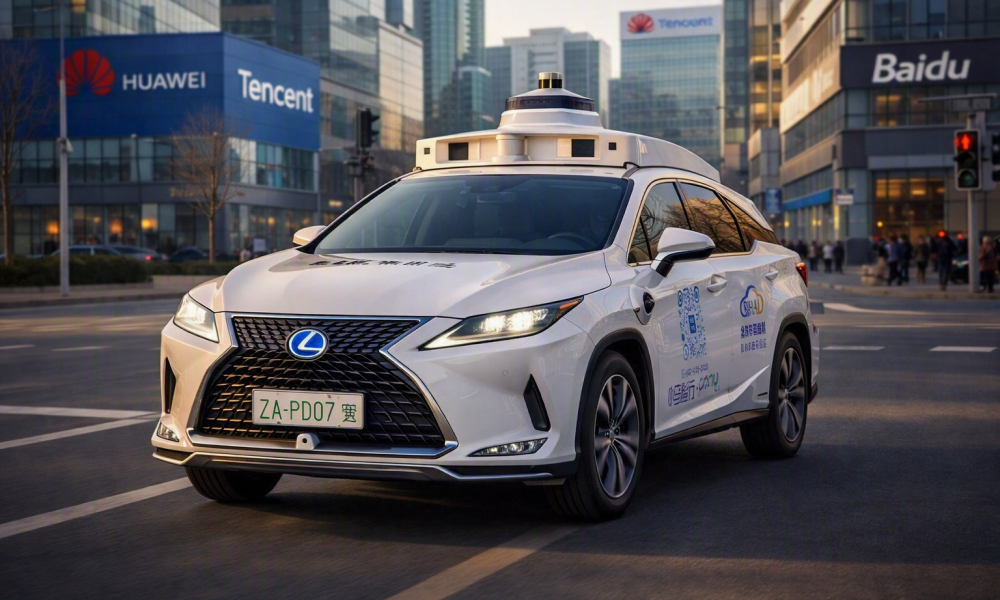
China’s autonomous mobility sector has reached a stage where the extraordinary has become routine. The Mobility Masterclass Study Tour, held from 15 to 22 August across Beijing, Guangzhou and Shenzhen, offered international delegates a rare opportunity to witness this reality at street level. The organisers promised an immersion into the world’s most advanced autonomous driving ecosystem. Delegates discovered that the promise was not exaggerated. China’s Level 4 capabilities are no longer confined to test tracks or carefully curated pilot zones. They are operating in dense urban environments, integrated into mainstream mobility platforms and supported by a regulatory framework that encourages scale rather than caution.
The tour began in Beijing, where delegates were introduced to the city’s High-level Automated Driving Demonstration Area. This district has become a showcase for China’s approach to autonomous deployment. Robotaxis from Pony.ai, Baidu Apollo and WeRide circulate through live traffic with a confidence that reflects years of iterative development. Delegates were invited to ride in these vehicles, experiencing journeys that felt less like trials and more like a glimpse of a future that China has already normalised. The vehicles navigated roundabouts, lane merges and pedestrian-heavy junctions with a smoothness that surprised even seasoned ITS professionals. The absence of a safety driver was notable, yet quickly forgotten as the vehicles settled into predictable patterns of behaviour.
Many European practitioners are familiar with Baidu Apollo, but Pony.ai and WeRide remain less well known outside Asia. Pony.ai has built a reputation for engineering discipline and a focus on commercial viability. Its robotaxis in Beijing operate within a defined but substantial service area, bookable through popular apps and priced competitively with conventional taxis. WeRide, meanwhile, has expanded from robotaxis into robobuses and autonomous freight. Delegates learned that the company’s strategy is built on multi-modal autonomy rather than a single flagship service. This breadth of capability was evident throughout the tour.
The visit to DiDi’s autonomous operations provided further insight into China’s mobility ecosystem. DiDi is often described as China’s equivalent of Uber, yet the comparison understates the scale and integration of its services. Delegates saw how autonomous vehicles are embedded directly into DiDi’s main app, allowing users to select a driverless option without switching platforms. This seamless integration has accelerated public acceptance. It also reflects a regulatory environment that encourages commercial deployment once safety thresholds are met, rather than insisting on prolonged pilot phases.
The tour then shifted to Neolix, a company that many delegates had heard of only in passing. Neolix specialises in autonomous logistics, producing small electric delivery vehicles that operate in neighbourhoods, business parks and university campuses. Delegates walked through Neolix’s logistics hub, observing fleets of compact autonomous units preparing for dispatch. These vehicles are designed for last-mile delivery and operate with a high degree of autonomy, navigating pavements and low-speed roads with sensors optimised for close-range perception. Neolix’s approach demonstrates how autonomy can transform logistics at a granular level, reducing labour requirements and enabling round-the-clock delivery without congestion impacts.
Guangzhou offered a different perspective. The city has positioned itself as a national leader in Intelligent Connected Vehicle development, and delegates were taken to its dedicated pilot zone. This area combines controlled testing with live deployment, allowing companies to trial new features while maintaining operational services. Robobuses were a highlight. These autonomous shuttles, operated by WeRide and Guangzhou’s municipal partners, run on fixed routes and are designed to complement existing public transport. Delegates rode on these vehicles, noting their steady acceleration, precise docking at stops and clear passenger information systems. The robobuses felt less like prototypes and more like early versions of a service that could be scaled rapidly.
A meeting with XPeng’s ADAS team provided insight into the consumer side of autonomy. XPeng is one of China’s most innovative electric vehicle manufacturers, known for its advanced driver assistance systems and rapid software development cycles. Delegates were shown how XPeng’s vehicles use high-definition mapping, sensor fusion and cloud-based updates to deliver features that approach Level 4 capability in controlled environments. XPeng’s engineers emphasised the importance of continuous improvement, with software updates pushed to vehicles on a weekly basis. This cadence contrasts sharply with the slower update cycles common in Europe and North America.
The final stage of the tour took delegates to Shenzhen, a city that has become synonymous with technological ambition. Shenzhen Bus Group hosted a session on autonomous public transport, demonstrating how robobuses are being integrated into the city’s wider mobility network. Delegates observed autonomous buses navigating depot environments, interacting with charging infrastructure and preparing for service. The company’s representatives explained how autonomous public transport is seen not as a novelty but as a practical solution to labour shortages and rising operational costs.
A visit to Nawan Smart Port revealed another dimension of China’s autonomous ecosystem. This port has deployed autonomous trucks, cranes and yard vehicles to streamline container handling. Delegates watched autonomous trucks manoeuvre through the port with precision, guided by a combination of sensors and centralised control systems. The scale of automation was striking. It illustrated how autonomy can transform industrial operations as effectively as urban mobility.
Huawei provided the final technical showcase. Delegates toured facilities dedicated to connected mobility, learning how Huawei’s expertise in telecommunications is being applied to vehicle-to-everything systems, sensor development and cloud-based mobility management. Huawei’s role in China’s autonomous ecosystem is substantial, yet often under-reported in Western media. The company’s work on high-bandwidth, low-latency communication is critical to enabling Level 4 operations at scale.
The overarching impression from the tour was one of maturity. China’s Level 4 capabilities are not theoretical. They are deployed, regulated and integrated into daily life. Delegates saw robotaxis operating without fanfare, logistics vehicles delivering goods autonomously, robobuses running scheduled services and autonomous port operations functioning with industrial efficiency. The companies behind these systems, from Pony.ai and WeRide to Neolix and XPeng, represent a mobility ecosystem that is both diverse and coordinated.
For international delegates, the experience was both inspiring and challenging. It demonstrated what is possible when regulatory alignment, industrial strategy and technological innovation converge. It also highlighted the gap between China’s deployment pace and the more cautious approaches seen in Europe. The Mobility Masterclass Study Tour offered a clear message. Autonomous mobility is no longer a distant ambition. In China, it is already part of the urban fabric.
Click the buttons below to see more articles:
See all ArticlesIndustry InsightEventsITS Thought LeadershipITS Educational