150x150.png)
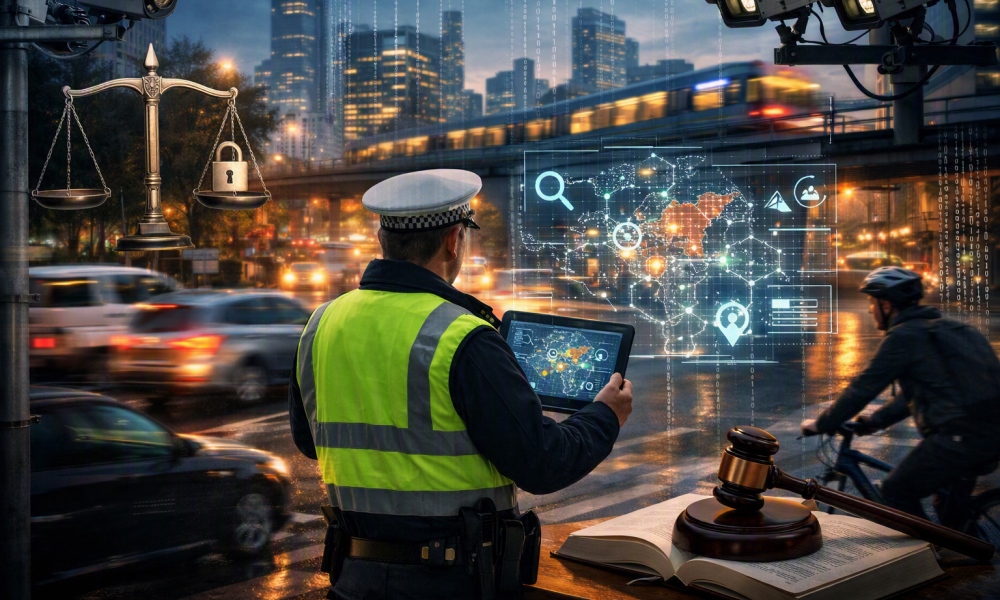
Predictive policing in transport is often discussed as if it were already woven into the fabric of modern mobility management. Many of the issues ITS technology deployments face are caused by wide ranging conspiracy theories of surveillance and enforcement. In reality though, these capabilities and applications remain as an emerging capability rather than a mainstream operational tool. The algorithms exist, the data streams exist, the analytical power exists, yet widespread deployment has not yet arrived. In countries like the UK, with strong statutory GDPR protections, dual use of installations would require complex legal changes to use for enforcement. What we have today are early pilots, isolated trials and sector-specific experiments that hint at what could become possible. The ethical questions therefore sit ahead of the technology rather than behind it, because the choices made now will shape how predictive policing evolves as it moves from concept to common practice.
Transport networks have always generated information, but the scale of contemporary mobility data is changing the landscape. Connected vehicles, roadside sensors, automated enforcement cameras, ticketing systems and mobile devices produce continuous streams of location, speed, flow and behavioural data. These streams allow analysts to see patterns that were previously invisible. They reveal where near misses cluster, where speeds rise unexpectedly, where pedestrian behaviour shifts in response to weather or events and where infrastructure design contributes to repeated risks. This analytical capability is already used widely for planning and operational optimisation. The step towards predictive policing is a natural extension, yet one that remains largely in development.
Current examples tend to be narrow in scope. Some cities use algorithms to anticipate speeding hotspots based on historical data and environmental conditions, allowing enforcement teams to position mobile units more effectively. A few rail operators use pattern recognition to identify stations where fare evasion is likely to rise at particular times, prompting targeted staff deployment. Certain highway agencies analyse connected vehicle data to predict breakdown-prone segments, enabling earlier intervention before incidents disrupt traffic. These applications demonstrate the potential of predictive approaches, but they are far from comprehensive policing systems. They are controlled pilots designed to test feasibility, accuracy and public acceptance.
The future vision is more ambitious. Predictive policing could become a routine part of transport management, where enforcement algorithms work alongside mobility analytics to anticipate risk across entire networks. Instead of reacting to incidents, authorities could intervene before they occur. A system might detect that a particular junction is entering a high-risk state due to weather, flow and behavioural indicators, prompting temporary speed adjustments or increased monitoring. A model might identify that a cycle corridor is likely to experience near misses during a specific event, leading to proactive signage or temporary infrastructure. A predictive engine might flag emerging patterns of non-compliance on a bus route, allowing operators to adjust timetables or deploy staff before issues escalate.
The ethical considerations become more pressing as these possibilities move closer to reality. Predictive models interpret behaviour through patterns rather than context. They identify correlations, not motivations. A flagged hotspot may reflect infrastructure shortcomings rather than deliberate rule-breaking. A highlighted group may simply travel at times or in ways that differ from the majority. If predictive policing becomes widely deployed without careful safeguards, it risks reinforcing inequalities already present in transport systems. Communities with limited access to safe infrastructure may be flagged more often. Travellers reliant on older vehicles may trigger more alerts. Areas with historical enforcement activity may continue to receive disproportionate attention due to feedback loops embedded in the data.
Transparency will be essential if predictive policing becomes a standard tool. Travellers will need clarity about how algorithms operate, what data they use and how predictions influence enforcement decisions. Authorities will need robust auditing processes to ensure models do not embed bias or perpetuate outdated assumptions. Public trust will depend on clear communication about why certain areas receive proactive attention and how fairness is protected. Without this, predictive policing could be perceived as surveillance rather than safety enhancement.
Privacy concerns will also intensify as deployment expands. Predictive systems rely on detailed mobility data, some of which can reveal sensitive information even when anonymised. The ethical question is not only whether data is secure, but whether its use for enforcement aligns with public expectations. People may accept data collection when it improves service reliability, but feel differently when the same data is used to anticipate rule-breaking. Consent becomes complex when the purpose of data shifts from optimisation to prediction.
The most constructive future applications will be those that enhance safety without increasing enforcement pressure. Predictive insights can guide infrastructure investment, highlight emerging risks, support vulnerable users and reduce harm before incidents occur. They can help authorities act early without acting unfairly. They can shift enforcement from punitive reaction to preventative support. When algorithms are used to improve signage, redesign junctions or adjust operations, the public sees tangible benefit. When they are used solely to target enforcement activity, trust becomes fragile.
Predictive policing will only become ethically defensible at scale if it remains grounded in human judgement. Algorithms can inform decisions, but they cannot replace contextual understanding. Enforcement strategies must remain proportionate, empathetic and transparent. Data must be refreshed regularly to avoid outdated patterns. Models must evolve as behaviour, infrastructure and social realities change. Public engagement must remain central so that travellers feel part of the conversation rather than subjects of it.
Transport systems are dynamic, and predictive policing will evolve alongside them. The technology is not yet widespread, but its trajectory points towards broader adoption. The choices made now will determine whether it becomes a tool that enhances safety and fairness or one that amplifies inequality and mistrust. The ethics of predictive policing are therefore not a constraint on innovation. They are a guide for responsible deployment. They remind us that mobility is a human experience shaped by trust, dignity and fairness. They remind us that foresight must be used carefully. Predictive policing has the potential to make transport safer and more resilient. Its future success will depend on how thoughtfully that potential is realised.
Click the buttons below to see more articles:
See all ArticlesIndustry InsightEventsITS Thought LeadershipITS Educational