
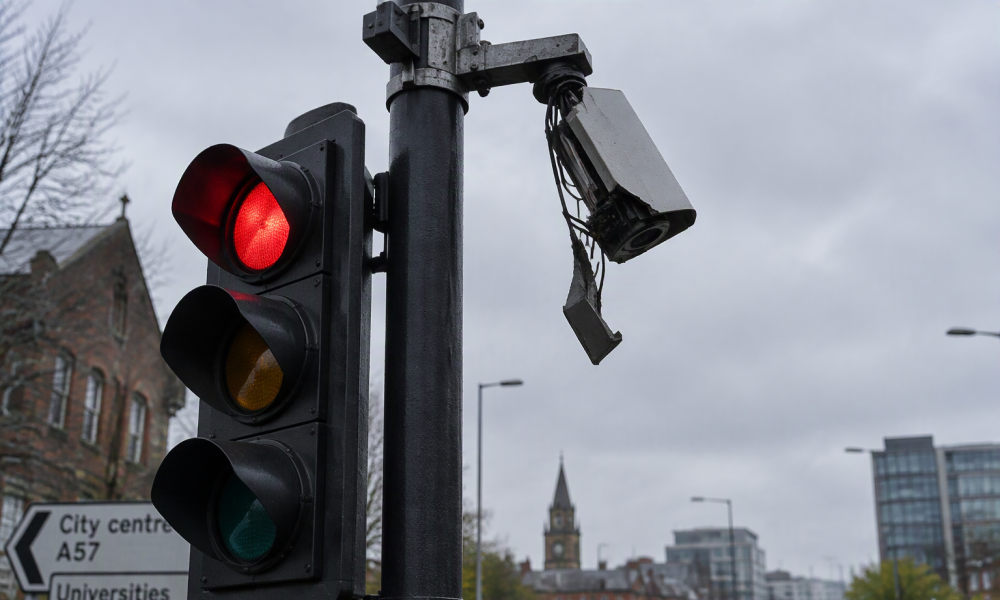
Intelligent Transport Systems have always relied on a social contract that is rarely discussed but absolutely fundamental. Whether deployed to improve safety, reduce congestion, support public transport, tackle emissions or provide better network management, ITS technologies operate successfully only when the public trusts both the technology itself and the organisations responsible for using it. The cameras, sensors, communications networks and data platforms that underpin modern mobility have little value if citizens believe they are being deployed for purposes that were never clearly explained.
That trust has come under increasing pressure in recent years. During the highly contentious rollout of London's Ultra Low Emission Zone (ULEZ), roadside cameras became targets for vandalism and sabotage. Many of those attacks were fuelled not by technical realities but by online conspiracy theories that portrayed relatively straightforward enforcement technology as part of a wider programme of surveillance and control. For transport professionals, the episode offered an uncomfortable reminder that public perception can often matter just as much as technical capability.
Against that backdrop, the recent revelation that Greater Manchester Police has taken ownership of hundreds of Automatic Number Plate Recognition (ANPR) cameras originally installed to support the region's abandoned Clean Air Zone scheme risks creating a new challenge for the ITS sector. While the move appears entirely lawful, publicly consulted upon and supported by many residents, it nevertheless touches upon exactly the sort of concerns that have enabled misinformation to flourish elsewhere.
The facts are relatively clear. As reported by the BBC, around 400 ANPR cameras that were originally installed as part of Greater Manchester's planned Clean Air Zone have now been integrated into Greater Manchester Police's existing ANPR network and are being used for crime detection and investigation. According to senior police officers, the system has already contributed to multiple arrests and enhanced operational effectiveness. Public consultation undertaken before the transfer attracted nearly 4,830 responses, with almost 90 per cent supporting the change in primary use, although privacy and data-sharing concerns featured prominently among respondents.
From a policing perspective, the argument is straightforward. Existing infrastructure that was funded, installed and operational can continue to deliver public value. Police representatives have highlighted the role of ANPR in supporting investigations into serious offences and locating vehicles linked to criminal activity. Greater Manchester Police had previously cited ANPR data as supporting investigations into 63 major and serious crimes over a 28-month period, including murder, robbery and firearms offences.
Transport professionals may well view the situation rather differently. The issue is not whether ANPR technology has a legitimate role in policing. It clearly does and has done for many years. The greater concern is how the public interprets the transition of infrastructure from one purpose to another.
Many residents will inevitably view these cameras as equipment that was originally justified as an environmental measure before being repurposed for law enforcement. Although the consultation process was transparent and the intended use publicly communicated, perceptions are often shaped by headlines rather than governance documents. In an era of fragmented media consumption, there is a genuine risk that the story becomes simplified into a narrative that “clean air cameras became police surveillance cameras”.
For campaigners already sceptical of road user charging, environmental enforcement and smart city technologies, the development appears likely to reinforce existing suspicions. More worryingly for the wider ITS community, it could provide fresh material for those who have long promoted inaccurate claims that transport technology is installed for one purpose while secretly intended for another.
This is where the reputational challenge becomes particularly significant. Modern ITS deployments increasingly rely on sophisticated data gathering and processing. Connected vehicle infrastructure, smart junctions, kerbside monitoring, mobility analytics platforms, digital traffic management systems and future road user charging schemes all depend on data-driven decision making. Although these systems are typically governed by strict legal, ethical and operational frameworks, many members of the public do not distinguish between different types of roadside technology.
To an engineer, the difference between an air quality monitoring sensor, an ANPR camera, a traffic detector and a connected vehicle roadside unit may be obvious. To many members of the public, they simply appear as another piece of roadside equipment collecting information.
That distinction matters enormously.
Once public trust begins to erode, opposition rarely confines itself to the specific technology under scrutiny. Instead, scepticism tends to spread across the broader transport technology landscape. Opposition to one camera system can quickly become opposition to roadside sensors generally. We have already witnessed pedestrian detectors being vandalised as a consequence of these misplaced conspiracies, putting vulnerable road users at risk. Concern about a policing application can easily spill over into resistance towards environmental monitoring, congestion management or public transport prioritisation schemes.
The ITS sector therefore faces a communications challenge that is arguably as important as the technical challenge. For years, transport authorities and suppliers have often assumed that the benefits of systems speak for themselves. Reduced congestion, improved journey reliability, lower emissions and enhanced safety are all compelling outcomes. Yet recent experience demonstrates that technical success alone is not enough.
Public confidence increasingly depends upon transparency regarding purpose, governance, data use, retention policies and accountability. The Greater Manchester case illustrates the consequences when infrastructure changes use, even through legitimate democratic processes. Citizens naturally ask questions about what else might change in future and who ultimately controls the data being collected.
Such concerns should not be dismissed or trivialised. In fact, engaging openly with them may represent the best defence against misinformation. When authorities proactively explain how systems operate, what information is collected, how long data is retained and what safeguards are in place, conspiracy theories have less space in which to grow.
There is another lesson here for future ITS programmes. Technology deployments should be designed with long-term transparency in mind. If infrastructure could potentially support multiple functions over its operational life, that possibility should be acknowledged from the outset. Citizens are generally more accepting of change when it occurs within clearly communicated expectations than when it appears unexpected or reactive.
The irony is that ANPR itself remains one of the most valuable and mature technologies available to transport and law enforcement agencies. It supports traffic management, journey time monitoring, network planning, freight analysis and crime reduction. Few transport professionals would argue against its utility. The challenge is not the technology. The challenge is maintaining confidence in the institutions that deploy it.
Looking ahead, the industry would be wise to treat the Greater Manchester episode as a warning rather than an isolated local issue. Smart mobility strategies across the UK depend upon public acceptance of increasingly connected and data-rich transport networks. Every controversy involving roadside technology has the potential to influence public attitudes far beyond the location where it occurs.
For ITS professionals, the priority must therefore extend beyond delivering efficient systems. Building and maintaining public trust needs to become a core project objective in its own right. Technical excellence remains essential, but legitimacy, transparency and engagement are increasingly just as important.
The future of intelligent mobility will not be determined solely by what technology can achieve. Equally important will be whether the public continues to believe that these systems are being deployed openly, honestly and in the interests of the communities they serve. The Greater Manchester ANPR story may ultimately prove successful from both policing and operational perspectives, but it also serves as a timely reminder that trust, once questioned, can become far harder to manage than any transport network.
Click the buttons below to see more articles:
See all ArticlesIndustry InsightEventsITS Thought LeadershipITS Educational