
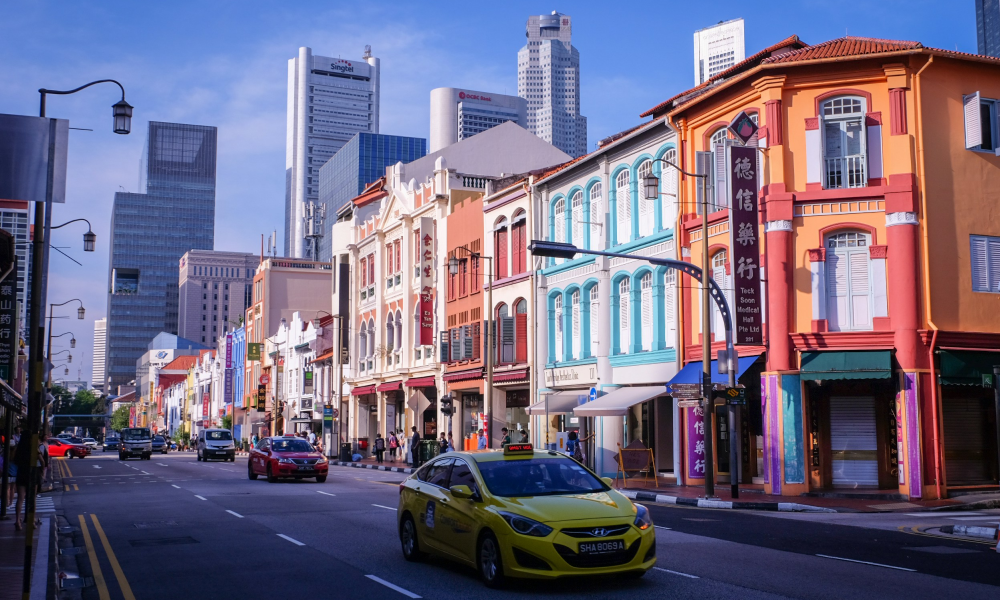
As cities across the world grapple with rising populations, ageing infrastructure, changing travel habits and the rapid advance of digital technologies, the challenge facing transport leaders is no longer simply how to move people efficiently. Increasingly, the question is how to create transport systems that are intelligent, resilient, sustainable and capable of adapting to the needs of future generations. Against that backdrop, Singapore Urban Mobility Week 2026 promises to offer one of the most significant opportunities of the year for policymakers, operators, technology providers and mobility innovators to come together and explore what comes next.
Taking place from 4-6 November 2026 at the Suntec Singapore Convention & Exhibition Centre, Singapore Urban Mobility Week (SUMW) is positioning itself as Asia's premier gathering for urban transport professionals. Jointly organised by the Land Transport Authority (LTA), MSI Global and MP Singapore, the event is expected to attract more than 8,000 participants from over 50 countries, alongside more than 200 exhibiting companies showcasing the latest developments in urban mobility technologies and services.
The scale of the event reflects the growing importance of cities in shaping the future of transport. While national strategies and international policy frameworks remain important, much of the innovation taking place today is happening at the urban level, where authorities are balancing environmental goals, economic growth, public expectations and operational realities. Cities are becoming living laboratories for new mobility concepts, digital infrastructure and automated transport systems, making events such as SUMW increasingly relevant to the global conversation.
This year's theme, Drive the Future: Autonomous Innovation, Smart Infrastructure, and Urban Mobility, captures many of the critical issues currently occupying transport authorities around the world. Autonomous vehicles continue to move from pilot projects towards real-world deployment, while transport operators seek ways to modernise networks, improve reliability and make better use of data. Simultaneously, ageing infrastructure across many developed economies is creating significant investment pressures, forcing governments and operators to consider how existing assets can be renewed while supporting future mobility demands.
Singapore has long occupied a unique position within that discussion. The city-state has earned an international reputation for taking a long-term, integrated approach to transport planning, combining investment in high-quality public transport with forward-looking policies around technology adoption, urban development and sustainability. That experience provides a fitting backdrop for an event focused on practical solutions rather than theoretical possibilities.
Proceedings will begin with an opening address from Singapore's Minister for Transport and Second Minister for Finance, Jeffrey Siow, who is expected to outline the country's vision for the future of urban mobility and discuss how investments being made today are intended to support generations of future travellers.
A key attraction of the programme will be the Leaders' Summit, which takes place on 4 November. Bringing together senior industry leaders, policymakers and regulators from nearly 20 countries, the summit will provide a platform for strategic discussions on some of the most pressing issues facing the transport sector. Four panel discussions led by LTA's senior leadership team will examine topics that resonate across global cities, including changing commuter expectations, the deployment of autonomous vehicles, workforce transformation and the renewal of rail infrastructure.
Each of these themes reflects a sector undergoing substantial change. Passenger expectations continue to evolve as digital services reshape experiences in almost every aspect of daily life. Travellers increasingly expect transport networks to be personalised, responsive and seamlessly connected. Meeting those expectations will require not only technological innovation but also organisational transformation, stronger partnerships and a willingness to embrace new business models.
Conversations will continue during the Industry Forum on 5 and 6 November, where delegates will delve deeper into autonomous and intelligent mobility, digitalisation, future-ready infrastructure and sustainable transport systems. Such discussions are likely to extend well beyond technology alone. Questions around governance, regulation, public acceptance, workforce development and funding models are becoming just as important as technical capability when determining whether innovation succeeds at scale.
Alongside the conference programme, the exhibition promises to provide a comprehensive showcase of the technologies shaping future transport networks. More than 200 participating companies and brands are expected to present innovations covering electric and autonomous vehicles, intelligent transport infrastructure, artificial intelligence-powered mobility services, rail and bus systems, and first-and-last-mile logistics solutions.
The breadth of organisations involved highlights the increasingly interconnected nature of urban mobility. Traditional boundaries between transport operations, digital technology, telecommunications and infrastructure are continuing to blur. Success in delivering smarter mobility is now dependent upon collaboration across multiple sectors, bringing together expertise that historically sat within separate industries.
Visitors can expect to see contributions from a strong roster of founding partners, including BYD Singapore, Certis Cisco Security, China Communications Construction Company, CRRC Corporation, Huawei International, SBS Transit, Siemens Mobility, SMRT Corporation and ST Engineering Urban Solutions. Together, these organisations represent a broad spectrum of capabilities ranging from vehicle manufacturing and digital connectivity to public transport operations and infrastructure delivery.
One particularly interesting aspect of SUMW 2026 is its focus on engaging the next generation of transport professionals. The Youth Xchange initiative will showcase 12 youth-led innovations and transport concepts developed through hackathons and academic projects. In an industry often focused on major infrastructure investments and established technologies, providing space for emerging talent to present new ideas brings a valuable dimension to the programme.
Fresh perspectives are becoming increasingly important as cities seek solutions to challenges that do not fit neatly within traditional transport disciplines. Young engineers, data scientists, designers and entrepreneurs frequently approach mobility issues with different assumptions and priorities, helping the sector reconsider established approaches and identify new opportunities.
Business collaboration also features prominently within the event through the Hosted Buyers Programme. Curated meetings between solution providers, transport agencies and operators will give participants an opportunity to move beyond discussion and explore practical partnerships. Such initiatives recognise that innovation rarely succeeds in isolation. Commercial relationships, strategic alliances and knowledge-sharing partnerships often determine how quickly good ideas can be translated into operational reality.
The organisers see the event as more than simply a conference and exhibition. For LTA Chief Executive Ng Lang, the gathering represents an opportunity for cities to exchange experiences, learn from one another and identify solutions to common transport challenges while also inspiring young people to explore careers within the sector. MSI Global Chief Executive Officer Chua Chong Kheng emphasises the importance of translating innovation into practical improvements for everyday journeys, while MP Group Managing Director Jason Ng sees the event as a catalyst for collaboration, business development and new market opportunities.
Taken together, those ambitions reflect the wider evolution of the transport industry. Mobility is no longer just about infrastructure or operations in isolation. It has become an ecosystem involving technology developers, public authorities, operators, academia, investors and users, all working together to create more connected urban environments.
For anyone with an interest in the future of cities, SUMW 2026 looks set to provide a valuable window into the challenges and opportunities that will define urban transport over the coming decade. From autonomous mobility and smart infrastructure to workforce transformation and sustainable operations, the themes being explored in Singapore are not unique to Asia. They are questions being asked in boardrooms, transport authorities and city halls across the globe.
As the world's urban centres continue their search for cleaner, smarter and more efficient ways to move people and goods, Singapore Urban Mobility Week offers an opportunity not only to showcase emerging technologies but also to examine how innovation can be turned into practical outcomes. In an era where the pace of change is accelerating, that conversation has rarely been more important.
Click the buttons below to see more articles:
See all ArticlesIndustry InsightEventsITS Thought LeadershipITS Educational