
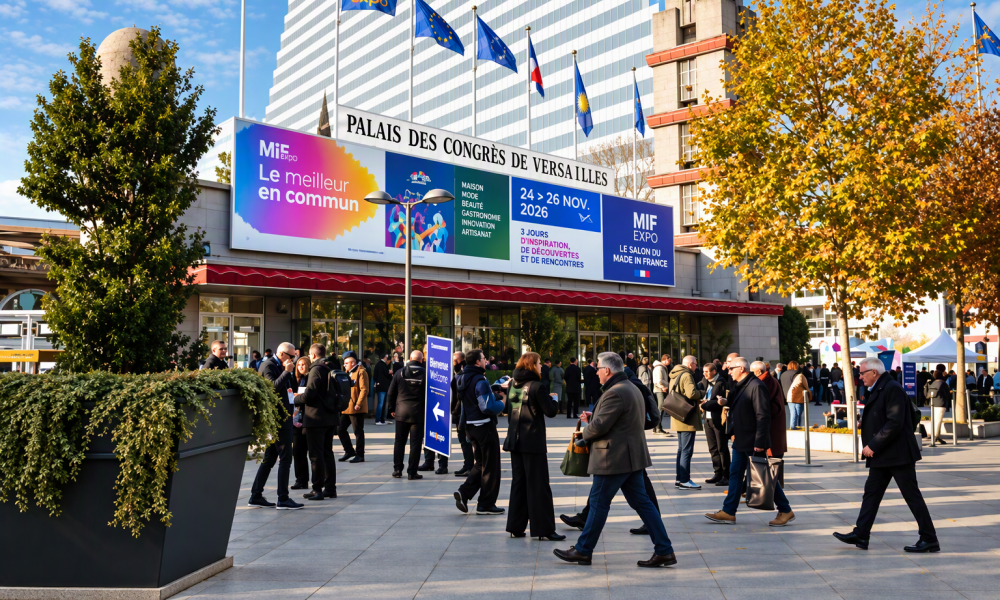
From 24 to 26 November 2026, Paris once again became a focal point for local government leaders, public sector decision makers, infrastructure providers and technology innovators as the Salon des Maires et des Collectivités Locales opened its doors at Paris Expo Porte de Versailles. Widely regarded as one of Europe's most influential events for municipalities and territorial authorities, the exhibition brought together more than 1,380 exhibitors and tens of thousands of visitors to explore the challenges and opportunities shaping the future of cities and regions. Transport and mobility featured prominently amongst the event’s core themes, reflecting the increasingly central role that intelligent transport systems, data and digital infrastructure play in modern urban governance.
For delegates participating in the trade mission, the Paris event offered an exceptional opportunity to observe how mobility policy is evolving across France and the wider European market. Unlike more conventional transport-focused exhibitions, Salon des Maires places mobility within a broader civic and economic context. Discussions about transport networks sit alongside debates on climate resilience, housing, digital transformation, energy transition, public health and urban regeneration. Such an integrated approach is becoming increasingly important as cities recognise that congestion, accessibility, sustainability and economic growth cannot be addressed in isolation. Instead, mobility is increasingly viewed as an enabling platform that supports wider societal outcomes.
Few cities illustrate this philosophy more clearly than Paris itself. Over the past decade, the French capital has become one of the most closely watched urban laboratories for transport innovation and policy reform. Extensive investment in cycling infrastructure, expanded pedestrian zones, low emission initiatives and multimodal transport integration have transformed the way residents and visitors move around the city. Public authorities have demonstrated a willingness to experiment with new approaches, often combining physical infrastructure improvements with sophisticated data-driven management systems. The result has been a city that continues to challenge traditional thinking about road space allocation and transport governance, providing valuable lessons for municipalities across Europe.
The mobility and transport sections of Salon des Maires reflected this wider transformation. Exhibitors showcased technologies designed to help local authorities manage increasingly complex transport ecosystems. Intelligent traffic management platforms demonstrated the use of real-time data to optimise traffic flow, reduce delays and improve operational efficiency. Connected roadside infrastructure highlighted the growing role of sensors, communications networks and cloud-based analytics in supporting responsive transport operations. Several suppliers emphasised the importance of integrating traditionally separate systems, enabling traffic signals, public transport networks, active travel infrastructure and environmental monitoring platforms to exchange information and support more coordinated decision making.
Artificial intelligence emerged as a recurring theme throughout the exhibition. Municipal leaders are increasingly looking towards AI-enabled tools to assist with network monitoring, incident response, predictive maintenance and transport planning. Rather than replacing human expertise, many exhibitors demonstrated how intelligent systems can augment operational decision making by analysing vast quantities of data and identifying patterns that would be difficult to detect through conventional methods. As cities face growing financial pressures and rising public expectations, the ability to achieve more efficient outcomes with limited resources is becoming an increasingly attractive proposition.
Urban traffic management remains one of the most immediate concerns for many local authorities, particularly as travel patterns continue to evolve following changes in working practices, e-commerce growth and demographic shifts. Solutions presented during the exhibition highlighted how advances in connectivity and analytics are helping authorities move from reactive management towards proactive network optimisation. Digital twins, predictive modelling and integrated control platforms are enabling operators to anticipate congestion, test interventions virtually and respond more effectively to emerging conditions. Such capabilities not only improve journey reliability but also contribute towards wider environmental objectives through reduced vehicle idling and smoother traffic flow.
Sustainability featured prominently throughout the event, reflecting the growing expectation that transport systems must contribute towards decarbonisation objectives while maintaining accessibility and economic vitality. Electric vehicle infrastructure, shared mobility services and integrated mobility-as-a-service platforms attracted significant attention. Yet there was also recognition that technology alone cannot deliver the required transformation. Successful mobility strategies increasingly depend upon policy alignment, behavioural change and long-term investment planning. Many discussions therefore focused on how public authorities can balance innovation with practicality, ensuring that new technologies deliver measurable benefits for communities rather than becoming isolated pilot projects.
Accessibility and inclusion formed another important strand of the mobility conversation. Municipal leaders are becoming increasingly aware that transport services must accommodate the needs of diverse populations, including older citizens, people with disabilities and those living in underserved communities. Exhibitors demonstrated technologies designed to improve journey information, wayfinding and network accessibility, while conference sessions explored how digital services can be developed without excluding users who may have limited technological confidence. Such discussions reflected a growing understanding that truly intelligent transport systems must be designed around people rather than technology alone.
For businesses participating in the trade mission, one of the greatest benefits of the event lay in the opportunity to engage directly with decision makers responsible for long-term infrastructure investment. The Salon des Maires occupies a unique position within the French public sector landscape, bringing together elected representatives, senior municipal officers and procurement specialists in a single venue. This creates valuable opportunities for organisations seeking to understand emerging priorities, explore partnership opportunities and gain insight into future investment programmes. The timing of the 2026 event was particularly significant, taking place during a period of municipal renewal following local elections and against the backdrop of evolving economic and environmental priorities.
Beyond the exhibition floor, the conference programme provided valuable perspectives on the future direction of urban mobility. Sessions examined the intersection of transport policy, digital transformation and local governance, highlighting how data-driven approaches are reshaping public service delivery. Several discussions focused on the challenge of translating innovation into operational reality, a concern familiar to transport authorities worldwide. Delegates repeatedly emphasised the importance of interoperability, standards and collaboration, recognising that many transport challenges transcend organisational and geographic boundaries.
Looking ahead, the themes emerging from Salon des Maires 2026 offer a useful indication of where the mobility sector is heading. The future of urban transport will not be defined by individual technologies in isolation, but by the ability to integrate infrastructure, data, policy and user needs into coherent mobility ecosystems. Cities are increasingly seeking solutions that deliver multiple benefits simultaneously, improving network performance while supporting decarbonisation, public health and economic resilience. Intelligent transport systems are therefore moving from being specialist operational tools to becoming essential components of broader urban development strategies.
For trade mission participants, Paris provided more than an exhibition visit. It offered a window into the changing relationship between mobility, technology and urban governance. As cities across Europe continue to grapple with the demands of growth, sustainability and digital transformation, the lessons emerging from events such as Salon des Maires are likely to influence transport policy and investment decisions for years to come. In that respect, Paris remains not merely a showcase for innovation, but a testing ground for the future of smart mobility itself.
Click the buttons below to see more articles:
See all ArticlesIndustry InsightEventsITS Thought LeadershipITS Educational