150x150.png)
Shared Mobility Rocks 2026 in Vienna delivered a clear message for cities and operators alike. Shared mobility is becoming a dependable pillar of urban transport and Intelligent Transport Systems are the quiet engine that helps it grow.
Vienna has a way of making good mobility feel effortless. Trams arrive when you expect them, stations stay legible even when they are busy and the network seems to understand the city it serves. That calm competence was on display on 4 - 5 May 2026 when Vienna hosted Shared Mobility Rocks, an event that calls itself the world’s most unconventional shared mobility gathering and then sets out to prove it. The format was playful and high energy, yet the conversations were grounded in practical reality. The theme was Time to Scale Up and it captured the mood across Europe. Shared mobility is moving from pilot projects into everyday life and that shift brings new expectations, new pressures and new opportunities.
The city did not simply provide a venue. It provided a working example. With Wiener Linien at the centre of proceedings and support from Mpact, Way to Go, ÖBB, nextbike and BMIMI, the programme moved between debate and demonstration, with site visits and on street experiences woven into the schedule. Delegates saw how shared bikes, shared cars and new forms of micromobility can sit alongside a strong public transport backbone without competing for oxygen. The point was not to celebrate novelty. It was to test what happens when these services have to deliver at scale and when they have to fit the daily routines of residents, commuters and visitors.
A single idea kept resurfacing, sometimes stated directly and sometimes sitting beneath the surface. Shared mobility does not scale on good intentions alone. It scales when it is made legible and dependable for the public and manageable for the city. That is where Intelligent Transport Systems come in. ITS is the data layer, the decision layer and the coordination layer that turns a collection of services into something that feels like a system. In Vienna it was clear that ITS is no longer backstage support. It is part of the core infrastructure that makes integration possible.
The festival atmosphere was real, but so was the intent. Sessions ranged across public mobility integration and the practicalities of plugging shared services into mass transit. There was a strong focus on shared mobility in housing developments, a growing feature of Vienna’s social and cooperative housing where mobility offers are being designed into neighbourhoods from day one. Corporate mobility management also drew attention, with employers increasingly acting as mobility influencers through incentives, travel policies and access to shared fleets. Mobility hubs were another anchor topic, not just as interchanges but as places where services, information and charging infrastructure meet. And because technology does not change behaviour on its own, speakers returned again and again to marketing, communication and the small frictions that decide whether a new option becomes a habit.
As the event unfolded the discussion kept circling back to questions that sound operational but are, in practice, digital. How do you give people confidence that a vehicle will be there when they need it. How do you prevent a mobility hub from becoming a confusing cluster of brands. How do you let someone move from tram to bike to rail without feeling as if they have started a new journey each time. Each of these questions is answered through ITS, through data, standards and coordination.
One of the strongest messages from operators and authorities was that real time data is now the lifeblood of shared mobility. People will only choose a shared option if they trust its availability. That trust depends on accurate location data, service status, occupancy signals and clear information about where vehicles can be picked up and left. It also depends on forecasting, because a map of what is available right now is not enough if demand surges at the end of a concert or during a downpour. Predictive modelling, integrated journey planning and open data standards all help move the experience from hopeful searching to confident choice. Without these ITS enabled data flows shared mobility becomes guesswork and guesswork does not scale.
Mobility hubs in Vienna offered a second lesson. They are as digital as they are physical. The visible elements are easy to describe, a tram stop next to shared bikes, scooters, car share bays, parcel lockers and charging points. The harder part is making the whole arrangement behave like one system rather than a line-up of separate services. That requires digital orchestration. It means consistent wayfinding and information across apps and screens. It means rules that are enforced fairly, so that bays are usable and the public realm remains orderly. It also means data governance agreements that allow the city to see what is happening across modes without compromising user privacy. In other words, it means ITS doing its job quietly in the background.
Payment and access integration completed the picture. The goal is frictionless entry, a single account that opens the network regardless of mode and a payment experience that feels more like retail than transport bureaucracy. Account based ticketing, Mobility as a Service platforms and unified payment systems are bringing that closer. Vienna’s own MaaS ecosystem was frequently referenced as a benchmark, not because it is perfect but because it shows what happens when the public transport backbone sets clear expectations and then invites shared services to connect through common standards.
If Shared Mobility Rocks is designed to feel different from a conventional conference, Vienna ensured it was also grounded in place. Wiener Linien’s presence was felt not only in the hosting but in the confidence with which the city talked about integration. Vienna has a long tradition of public provisioning and speakers referred to that history as part of the reason the city can treat public transport as the backbone while still making space for shared services. The relationship is framed as extension rather than competition. That framing matters because it shapes regulation, investment and how customers are guided through options.
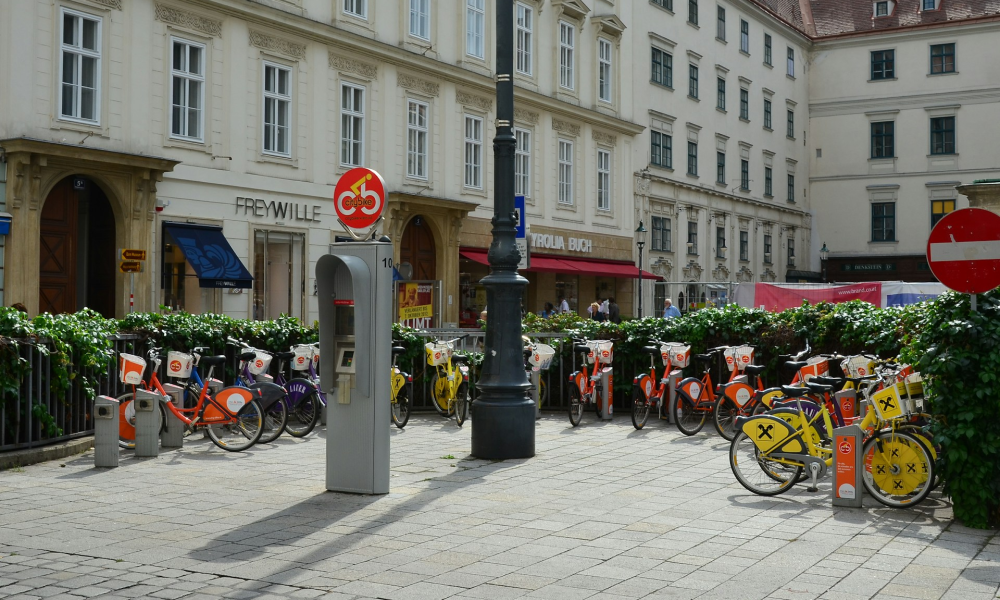
The site visits reinforced the message. Delegates looked closely at the nextbike and ÖBB shared bike networks and at residential mobility hubs built into new housing developments. They heard about corporate mobility pilots and saw how ticketing and access can be aligned across services. For ITS professionals the value of these visits was not in the novelty of vehicles or hardware. It was the reminder that digital systems only matter when they are embedded in real streets, real communities and real behaviour, where a broken data feed or a confusing handover between apps can undo months of policy work.
One session that cut through the festival gloss was titled Break Through Mobility Barriers. It focused on the obstacles that still prevent shared mobility from becoming a default choice for more people. Much of what was discussed will be familiar to any city trying to manage a fast-moving market. Regulation remains fragmented across Europe, which makes it hard for operators to invest with confidence and hard for cities to compare outcomes. Data sharing can still feel uneasy, particularly where commercial sensitivity meets public accountability. Speakers returned to the need for standardised APIs and to the practical issue of interoperability, because a connected network cannot rely on bespoke integrations city by city. Equity also sat at the centre of the debate. If shared services cluster only where demand is already high, then they risk reinforcing disadvantage in lower income districts. Finally, there is the operational reality of running multimodal fleets, where maintenance, rebalancing and safety management are all multiplied by scale.
What emerged from that discussion was that ITS is not a bolt on fix. It is the route to consistency. Standardisation, interoperability and digital governance are what allow shared mobility to move beyond niche adoption. When data definitions align and services can exchange information safely, cities can plan with evidence, and operators can build user experiences that are dependable. When access rules are clear and enforcement is supported by digital tools, the public realm benefits as much as the customer. In that sense the barriers are not only technical. They are organisational and political too and ITS provides a neutral framework for working through them.
A later debate asked a deliberately provocative question about who rules the mobility game. The conversation moved quickly through the roles of public transport authorities, shared mobility operators, real estate developers, employers and the technology platforms that sit between supply and demand. The conclusion was candid and reassuring. No single actor can own the future of mobility and trying to do so would likely slow progress. The only viable model is collaborative governance where responsibilities are clear and where the infrastructure for cooperation is trusted. This is another point where ITS becomes essential, not as a gadget but as the shared layer that allows coordination without forcing any party to surrender its identity or its mandate.
There is also a wider point for the ITS community. As shared mobility becomes mainstream the arguments become less about shiny vehicles and more about outcomes. That means safety, reliability, integration and public value. ITS sits in the middle of those outcomes and it carries a responsibility to be transparent, secure and designed around people. Done well it creates confidence. Done poorly it can undermine trust very quickly. Vienna’s conversations showed that the sector understands this and is ready to treat digital infrastructure with the same seriousness as rails, roads and power supplies.
Shared Mobility Rocks may brand itself as unconventional, yet its influence is increasingly formal. The Vienna edition was listed by the EU Urban Mobility Observatory as a notable event in the 2026 calendar, a sign that the discussions taking place here are feeding into policy and practice across Europe. The format helps. When speakers can move between the stage, the street and the hub, the conversation stays honest. It is harder to hide behind theory when the city outside is offering a live test of what you are proposing.
By the end of the event the message felt straightforward. Shared mobility is entering a new phase of maturity and ITS will decide whether it succeeds at scale. People will not change their routines for services that feel unreliable or confusing. Cities will not back models that cannot demonstrate safety, equity and public value. Operators will struggle if every integration is a one-off negotiation. ITS addresses all of this by making mobility knowable in real time, by enabling integration across modes and by providing the governance mechanisms that let multiple actors’ coordinate. It supports safety through better monitoring and clearer rules. It supports user experience by reducing friction at the points where journeys usually fall apart.
There was a final reciprocity too. ITS needs shared mobility as much as shared mobility needs ITS. Shared services create the real-world laboratory where multimodal systems are stress tested every day, where data quality is exposed, where standards either work or fail and where public expectations of convenience are rising fast. Vienna offered a glimpse of what comes next, a city where mobility is shared, intelligent and integrated because it is designed around people first and technology second. If we want shared mobility to scale, we must treat the digital backbone with the same care as the physical network and we must build it in a way that cities can trust and the public can understand.
Click the buttons below to see more articles:
See all ArticlesIndustry InsightEventsITS Thought LeadershipITS Educational