150x150.png)
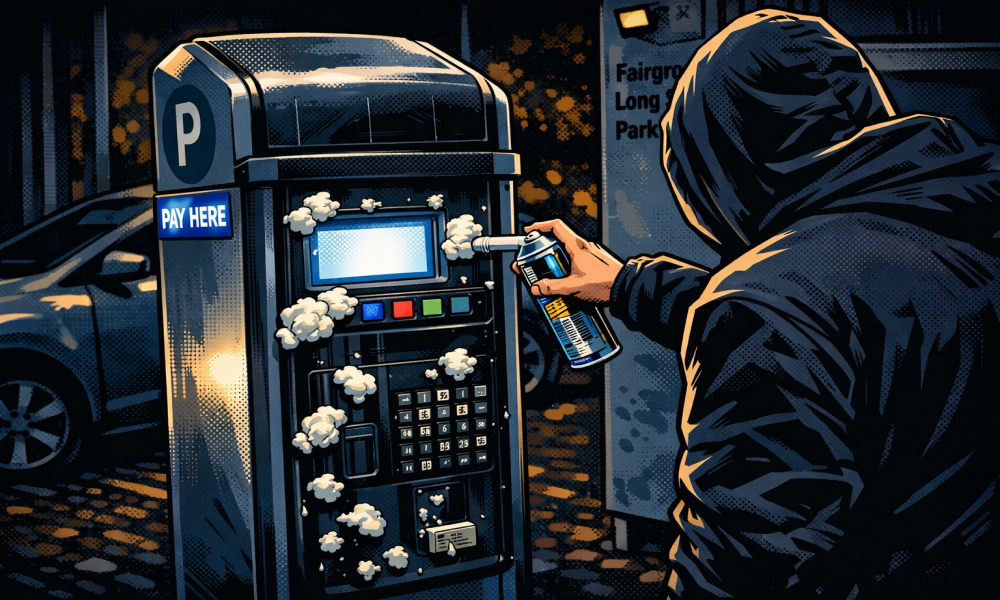
It’s a small story with a big message. As reported on the BBC, by Local Democracy Reporting Service writer Lee Trewhela, a brand-new car-park ticket machine in Cornwall was recently found covered in expanding foam (the kind normally used in building, when installing windows etc), rendering it completely useless. The image is striking, a gleaming piece of civic infrastructure, freshly installed, with the coin and card payment slots filled with white chemical froth. It’s an act of vandalism that feels almost symbolic, a literal silencing of technology by someone who, for whatever reason, decided they’d had enough.
For those working across the Intelligent Transport Systems (ITS) sector, this incident should serve as more than a passing curiosity. It’s a reminder that public frustration with transport technology is not just simmering, it is occasionally boiling over. While the foam may be removed, the underlying issue is harder to clean away, the growing disconnect between the people who design and deploy smart mobility systems and the citizens who encounter them in everyday life.
The vandalism in Cornwall isn’t an isolated event. Across the UK and Europe, councils and operators have reported increasing cases of damaged or stolen roadside equipment, from traffic sensors and cameras to EV chargers and parking meters. Some are opportunistic thefts for scrap metal or electronics, others are deliberate acts of protest against perceived surveillance, unfair charges, or bureaucratic inefficiency.
In each case, the message is the same, someone feels unheard. The technology that was meant to make life easier has, for a subset of the public, become a symbol of control, cost, or exclusion. When dialogue fails, destruction becomes expression.
ITS professionals often speak of “seamless integration”, systems that connect vehicles, infrastructure, and users into a frictionless network. Yet friction is precisely what’s emerging. The more visible technology becomes in public spaces, the more it invites emotional reactions. A parking machine isn’t just a payment point, it’s the physical manifestation of a policy of who pays, who benefits, and who feels penalised.
In Cornwall, the foam attack may have been a one-off act of frustration, but it resonates with wider tensions. As local authorities introduce digital-only payment systems, some users feel excluded by the disappearance of cash options. Others resent what they see as the creeping automation of machines replacing attendants and apps replacing human interaction.
For the ITS sector, these reactions highlight a crucial truth that innovation without empathy risks alienation. The smartest system in the world still depends on public trust to function.
So, what can the industry take from a vandalised machine in a coastal car park?
Behind every act of vandalism is a person, not a statistic. Understanding the motivations behind such behaviour can help shape better systems. Some may act out of anger at perceived unfairness, others may simply be confused or excluded by digital interfaces.
Human-centred design isn’t just about usability, it’s about dignity. A machine that assumes everyone has a smartphone or a contactless card may inadvertently marginalise those who don’t. Inclusivity isn’t a soft ideal, it’s a hard requirement for public acceptance.
There’s a temptation to respond to vandalism with tougher measures, such as reinforced casings, CCTV, or fines. But while deterrence has its place, dialogue is more powerful. The ITS sector has an opportunity to lead by example, to show that technology can listen as well as instruct.
Imagine if every new installation came with a short, plain-language explanation: This system helps reduce congestion and emissions. It doesn’t record personal data. It’s here to make your journey smoother. That kind of transparency costs little but earns a lot.
The Cornwall incident also reflects a broader cultural moment. Across society, trust in institutions (governmental, corporate, technological), is under strain. The rise of misinformation and polarisation means that even benign infrastructure can become a lightning rod for suspicion.
For ITS professionals, this is both a challenge and an opportunity. The sector sits at the intersection of technology and daily life. It can either become another faceless system or a visible force for good. The difference lies in how it communicates, educates, and empathises.
Perhaps the most striking aspect of the BBC report is its ordinariness. This wasn’t a major protest or a coordinated campaign, just a single act in a quiet car park. Yet it encapsulates the fragile relationship between innovation and acceptance.
Trust, once lost, is hard to regain. But every incident like this can be reframed as a learning moment. The ITS community can use it to spark conversations about design ethics, public engagement, and the emotional landscape of mobility.
If a parking machine can provoke anger, what might a network of autonomous vehicles or AI-driven enforcement cameras do? The answer depends on how well the sector anticipates and addresses public concerns before they escalate.
In the end, the expanding foam is more than vandalism, it’s metaphor. It expands to fill the gaps, just as frustration expands to fill the spaces where communication is missing. The challenge for ITS is to fill those spaces first, with understanding, transparency, and respect.
As the industry moves toward smarter cities and connected corridors, it must remember that every sensor, every screen, every machine is part of a social contract. Technology may enable efficiency, but trust enables progress.
The Cornwall story will fade from headlines soon enough. Yet its message should linger, innovation doesn’t exist in isolation. It lives, and sometimes struggles, in the messy, emotional world of human behaviour.
For ITS professionals, that’s not a reason to despair; it’s a call to engage. Because the next time someone reaches for a can of expanding foam, it shouldn’t be to silence technology, it should be to seal the cracks in our understanding.
Click the buttons below to see more articles:
See all ArticlesIndustry InsightEventsITS Thought LeadershipITS Educational